Why your employer retirement plan is worth fighting for – the right way

If you’ve spent years building up your 401(k) or 403(b), the thought of splitting it in divorce probably makes your stomach turn. That account represents decades of saving, countless paycheck deductions, maybe even employer matches that finally vested after you stuck it out through those tough years.

Here’s what I tell couples in my mediation practice after nearly two decades helping people navigate these decisions: dividing employer retirement plans doesn’t have to destroy your financial future, but getting it wrong can cost you tens of thousands of dollars. The difference comes down to understanding how these accounts actually work and having someone with financial training help you structure the division intelligently.

What makes these accounts different from other assets

Your employer retirement plan isn’t like your house or car. You can’t just sign it over or write someone a check for half of it. These accounts are governed by federal law under ERISA – the Employee Retirement Income Security Act – which means they come with strict rules about who can access them and how.

A 401(k) is a standard retirement plan for most private sector employees. Nonprofit employees typically have 403(b) plans, while government and certain nonprofit employees may have 457(b) plans. They all work similarly and require a special court order to divide them in a divorce. That’s where things get interesting, and where many couples make expensive mistakes.

The QDRO: your ticket to splitting the account without penalties

QDRO stands for Qualified Domestic Relations Order – basically a court order that tells the retirement plan administrator to give a portion of one spouse’s account to the other spouse. Without a QDRO, the plan administrator can’t and won’t touch the money, regardless of what your divorce decree says.

Understanding the importance of a QDRO to divide retirement accounts in divorce, helping couples avoid delays, penalties, and costly mistakes with guidance from Equitable Mediation. Call (877) 732-6682 today.

I’ve seen couples finalize their divorce, thinking they’d handled everything, only to discover months later that the 401(k) wasn’t actually divided because no QDRO was drafted. Now they’re back in the system, trying to fix it, spending more money, and creating more conflict.

Here’s what the QDRO process looks like. After your divorce agreement specifies how the account will be divided, someone needs to draft a QDRO that translates that agreement into language the plan administrator can follow. This isn’t a DIY project. The order must comply with both federal law and your specific retirement plan’s rules, which can be surprisingly detailed.

Once drafted, the QDRO goes to the plan administrator for pre-approval, then gets submitted for approval, and then back to the plan administrator for implementation. This process typically takes two to six months, even when everything goes smoothly.

Evaluating QDRO distribution choices in divorce, including lump-sum withdrawals, IRA rollovers, tax impact, and long-term retirement growth with support from Equitable Mediation Call (877) 732-6682.

Immediate distribution versus keeping the money in the plan

Once the QDRO is approved, the spouse receiving a portion faces a choice: take an immediate distribution of their share, or keep it in the ex-spouse’s plan or roll it into their own IRA.

Taking an immediate distribution has one significant advantage: you get a one-time exception from the 10% early withdrawal penalty that generally applies if you’re under 59½. You’ll still owe income taxes on this pre-tax money, but you avoid the additional 10% penalty.

But here’s the reality. If you withdraw that money now, you’re taking it from a tax-deferred account where it could have continued growing for another twenty or thirty years. You avoid the 10% penalty, but you’re still paying income taxes at your current rate, and you lose all that future growth. It’s not automatically a bad decision, but it needs to be an informed one.

The alternative is to roll it into your own IRA within sixty days. This keeps the money working for your retirement and preserves its tax-deferred status. For most people who can manage without touching these funds, that’s the financially more intelligent choice.

Outstanding loans, vesting, and multiple accounts

If there’s an outstanding loan against the 401(k), you’re really dividing what’s left after accounting for the debt. If the account has $100,000 but there’s a $20,000 loan, you’re dividing $80,000 of actual value. Your divorce agreement should clearly state who’s responsible for repaying the loan.

Not all the money in your 401(k) might actually be yours yet. Employer-matching contributions often come with vesting schedules – you earn full ownership over time, typically over three to six years. You’re dividing the marital portion of the vested balance. If unvested employer contributions won’t vest because someone’s leaving the company, that affects the actual value of what you’re dividing.

If you’ve worked for multiple employers, you may have several 401(k)s or 403(b)s scattered around. Each one needs its own QDRO. You could divide all accounts proportionally, or negotiate a trade in which one spouse keeps all their accounts, and the other gets a larger share of the larger account. In mediation, we can structure it to make sense for your situation.

Couples working through retirement division strategies in mediation, comparing 401(k)s, pensions, and asset trade-offs to create balanced, tax-efficient agreements with Equitable Mediation. Call (877) 732-6682 today.

The mediation advantage for retirement account division

In litigation, you’re handing your financial future to a stranger who doesn’t know your situation and applying rigid formulas that might not serve either of you well. A 50/50 split gets ordered based on some formula, and that’s that – regardless of whether it actually makes sense for your circumstances.

In mediation, we can be strategic. Maybe the 401(k) has great investment options and low fees, making it worth more than its face value. Perhaps one of you needs funds for a down payment on a house and could benefit from the QDRO distribution exception. You might consider trading retirement assets for equity in the home or offsetting your 401(k) against a pension — one of several strategies used when dividing pensions in divorce.

Here’s an example from a New Jersey couple we mediated with: The husband had a $400,000 401(k) with excellent low-cost index funds, while the wife had a $200,000 pension from her teaching career. Rather than splitting both accounts, we structured an agreement under which he kept his entire 401(k), and she kept her full pension. Each walked away with roughly equal retirement value, avoiding the complexity and cost of two QDROs while maintaining control over accounts they knew well.

That kind of creative solution only happens when you’re working cooperatively in mediation. In litigation, you get a formula applied to each account individually, whether that makes sense or not.

Navigating financial complexity in retirement division

This is where having financial expertise in your corner makes an enormous difference. If your compensation includes bonuses, stock options, RSUs, or equity shares that flow into your 401(k), the division becomes more complex. When do you value those assets? How do you account for vesting schedules on equity compensation? What happens if unvested shares vest after the divorce but before the QDRO is executed?

With an MBA in Finance and specialized training from the Institute for Divorce Financial Analysis, I can cut through this complexity. We can model different scenarios: What if you take a larger share of the 401(k) and your spouse takes more home equity? How does that affect your long-term retirement security? What if one of you is planning to relocate to a state with different income tax rates – how does that change the after-tax value of retirement withdrawals?

These aren’t just theoretical questions. The answers directly impact your financial security for decades to come. Getting them right requires someone who understands both the technical aspects of retirement accounts and how to structure settlements that serve your long-term interests.

Working through the process with active guidance

We don’t require you to have everything figured out before coming to mediation. That’s not realistic, and it’s not how we work. Instead, we actively guide you through each decision point, presenting options and helping you understand the implications of each choice.

Should you take the QDRO distribution or roll it over? That depends on your immediate financial needs, your tax situation, your retirement time horizon, and whether you have the discipline to avoid touching money that’s been rolled into an IRA. We’ll work through all of these factors together.

How do you handle a 401(k) loan that’s still outstanding? We’ll look at who’s better positioned to pay it off and structure the division accordingly. If the loan affects the actual value being divided, we’ll account for that in the overall settlement.

What if the plan administrator rejects the first QDRO draft because it doesn’t comply with the plan’s specific rules? This happens more often than you’d think. We’ll work with the QDRO specialist to revise and resubmit until it’s approved. You’re not navigating this alone or hoping you didn’t miss something critical.

Planning beyond the immediate divorce

Dividing retirement accounts isn’t just about splitting what exists today. It’s about ensuring you’re both positioned for financial security in 20 or 30 years. That requires thinking ahead about how changes in circumstances might affect your retirement planning.

What if one spouse remarries and combines households, significantly reducing living expenses? What if health issues arise that require early retirement? What if the job market shifts and someone needs to draw on retirement funds sooner than planned? While we can’t predict the future, we can build agreements that give you flexibility to adapt as life changes.

This future-focused approach sets mediation apart. We’re not just documenting a division of assets – we’re helping you create a financial foundation that gives you confidence moving forward, regardless of what comes next.

The choice between cooperation and conflict

Your employer retirement plan represents years of disciplined saving and sacrifice. It’s probably one of your most valuable assets, and how you divide it in divorce will significantly impact your financial security for the rest of your life.

In litigation, you lose control of that decision. Someone who doesn’t know your financial life applies rigid rules and hands down orders. The process is expensive, drawn-out, and often leaves both spouses feeling frustrated with the outcome.

In mediation, you maintain control. You make informed decisions with expert guidance, structure arrangements that actually work for your situation, and preserve the resources you’ve worked so hard to build. You’re not fighting over your retirement accounts – you’re working together to protect them.

The technical aspects of dividing 401(k)s, 403(b)s, and 457 plans are complex, but they’re not mysterious. With proper guidance and a cooperative approach, you can structure a division that protects both of your retirement futures without years of conflict or devastating legal bills. Your financial security is too important to leave to chance or to rigid court formulas that don’t account for your real life.

FAQs About Dividing Retirement Accounts in Divorce

A Qualified Domestic Relations Order—universally abbreviated as QDRO and pronounced “quadro”—is a court-issued order specifically designed to divide employer-sponsored retirement plans between divorcing spouses without triggering immediate tax consequences or early withdrawal penalties.

The QDRO serves as the essential mechanism that permits a retirement plan administrator to legally pay benefits to someone other than the plan participant—specifically a former spouse designated as the “alternate payee.” Federal law mandates that no qualified retirement plan can divide benefits without a properly executed QDRO.

How the QDRO becomes “qualified”

The QDRO must receive dual approval. First, the retirement plan administrator verifies the order complies with plan rules. Second, approval confirms it aligns with divorce settlement terms. This dual approval process ensures the division protects both parties’ financial interests while maintaining compliance with federal tax and retirement law.

What information the QDRO must include

The QDRO must include the formal plan name (incorrect plan naming is the single most common reason for rejection), full names and addresses of both the participant and alternate payee, Social Security numbers, the specific dollar amount or percentage being allocated to the alternate payee, and clear instructions regarding payment methods and timing.

Importantly, a QDRO cannot require the plan administrator to do anything the plan doesn’t already allow under its existing terms, and it cannot accelerate the availability of funds beyond what the plan permits.

Which plans require a QDRO

Plans requiring a QDRO include 401(k) plans, 403(b) plans, 457 deferred compensation plans, traditional defined benefit pensions, profit-sharing plans, and other employer-sponsored qualified retirement accounts. The QDRO protects the receiving spouse by creating legal entitlement to retirement benefits that a marital settlement agreement alone cannot necessarily enforce.

Dividing Individual Retirement Accounts—including traditional IRAs, Roth IRAs, SEP IRAs, and SIMPLE IRAs—follows fundamentally different rules than dividing employer-sponsored retirement plans, and understanding these distinctions is critical to avoiding costly mistakes.

IRAs don’t require QDROs

Unlike 401(k)s, 403(b)s, pensions, and 457 plans which all require QDROs, IRAs are governed by the Internal Revenue Code rather than ERISA and therefore do not require a QDRO for division. Instead, IRAs are divided through a process called “transfer incident to divorce,” which involves a direct trustee-to-trustee transfer from one spouse’s IRA to the other spouse’s IRA pursuant to a divorce decree or property settlement agreement.

When executed correctly as a transfer incident to divorce explicitly authorized by the divorce decree, this transaction is completely tax-free and penalty-free for both parties. The recipient spouse becomes the legal owner of the transferred IRA assets and assumes full responsibility for all future taxes on distributions.

The critical mistake to avoid

If the IRA owner simply withdraws money and gives it to the ex-spouse, the IRS treats this as a taxable distribution subject to ordinary income taxes plus a ten percent early withdrawal penalty if the owner is under age 59½. This represents one of the most common and financially damaging mistakes in retirement account division.

How to properly execute an IRA division

To properly execute an IRA division, the divorce decree or property settlement agreement must explicitly detail the division terms, and the financial institution holding the IRA must receive proper documentation including the court order and required transfer forms specific to that custodian. Each IRA custodian has unique requirements and forms, so contacting the financial institution before finalizing the divorce decree helps ensure compliance.

Timing and flexibility differences

Another important distinction is timing and flexibility. IRA divisions can often be executed more quickly than QDRO divisions because they don’t require plan administrator approval, though they still demand careful attention to IRS rules and custodian requirements to preserve tax-advantaged status.

Retirement plans fall into two primary categories—defined contribution plans and defined benefit plans—each requiring distinct approaches when drafting QDROs.

Defined contribution plans

Defined contribution plans include 401(k) plans offered by private employers, 403(b) plans provided to employees of public schools and tax-exempt organizations, 457 deferred compensation plans designed for state and local government employees as well as certain non-profit workers, Employee Stock Ownership Plans (ESOPs), profit-sharing plans, thrift savings plans for federal employees, and various other account-based retirement vehicles.
These defined contribution plans have readily ascertainable account balances on any given date, making valuation relatively straightforward. When dividing a defined contribution plan, the QDRO typically awards the alternate payee either a specific dollar amount or a percentage of the account balance as of a particular valuation date, such as the date of separation or date of divorce.

Market fluctuation considerations

Market fluctuations between the divorce agreement date and actual transfer date present significant risk. If the stock market declines substantially during the QDRO processing period—which can take several months—the alternate payee may receive considerably less than expected. Well-drafted QDROs address this by specifying whether gains and losses occurring during the processing period are shared proportionally or whether the account balance is frozen as of the agreement date.

Defined benefit plans (pensions)

Defined benefit plans, commonly called traditional pensions, promise to pay a fixed monthly benefit at retirement based on a formula typically involving years of service, age at retirement, and final average salary. Dividing pensions through QDROs is significantly more complex than dividing 401(k)-style plans due to actuarial calculations required to determine present values and because benefits depend on future contingencies.
Pension QDROs must address crucial issues including whether the alternate payee receives benefits through separate interest or shared payment methods, survivor benefits eligibility, what happens if the participant continues working past normal retirement age, and cost-of-living adjustments.

Survivor benefits for pensions

Survivor benefits represent a particularly critical consideration. Pensions must offer Qualified Joint and Survivor Annuities and Qualified Preretirement Survivor Annuities, and the QDRO must explicitly address whether the alternate payee retains survivor benefit rights or these protections are lost upon divorce.

Understanding tax implications is essential when dividing retirement accounts because proper execution can preserve tax-deferred status while mistakes can trigger substantial immediate tax liability and penalties.

When dividing qualified plans with a QDRO

When a QDRO properly divides a qualified retirement plan such as a 401(k), 403(b), or 457 plan, the division itself represents a non-taxable event—neither spouse pays taxes or penalties at the time accounts are split.

However, tax responsibility for future distributions depends on the specific arrangement structure. If separate accounts are established for each spouse, each party becomes individually responsible for taxes on their own future distributions based on their personal tax situation.

The early withdrawal penalty exception

One significant advantage of QDRO distributions is the waiver of the normally applicable ten percent early withdrawal penalty for distributions to alternate payees under age 59½, provided the distribution occurs pursuant to the QDRO terms. This penalty-free withdrawal option applies only to amounts distributed directly to the alternate payee and not rolled over into another retirement account.

If the alternate payee chooses to roll the funds into their own IRA, those funds remain subject to normal early withdrawal penalties if accessed before 59½ unless another exception applies.

Mandatory withholding

Mandatory twenty percent federal income tax withholding does apply to any QDRO distribution paid directly to the alternate payee rather than rolled over. This means if you need a specific net amount, you must request a gross distribution sufficient to cover the withholding plus your desired net proceeds.
IRA division tax treatment

For IRA divisions executed as transfers incident to divorce, the transaction is completely tax-free when done correctly through direct trustee-to-trustee transfer, with the recipient assuming ownership and all future tax liability.

The pre-tax versus after-tax valuation issue

Critically, retirement accounts represent pre-tax assets while most other marital property represents after-tax value, creating valuation disparities. Trading a $100,000 401(k) for a $100,000 car creates inequality because the 401(k) holder will pay substantial taxes upon distribution while the car owner faces no such future tax burden.

After successfully obtaining a QDRO award from a qualified retirement plan, the alternate payee typically faces several distribution options, each carrying distinct tax consequences and strategic considerations.

Option 1: Direct rollover to your own IRA (most common)

The most common and generally most advantageous option involves executing a direct rollover into the alternate payee’s own Individual Retirement Account. This preserves the tax-deferred status of the funds while providing complete control over investment choices and distribution timing going forward.
This direct rollover maintains all tax advantages, imposes no immediate tax liability or penalties, and allows the funds to continue growing tax-deferred until you need them in retirement. The rollover must occur through a direct trustee-to-trustee transfer to avoid the mandatory twenty percent withholding that applies to distributions paid to individuals.

Option 2: Lump-sum cash distribution

Alternatively, the alternate payee can elect to take a lump-sum cash distribution, receiving immediate access to funds which might be necessary for pressing financial needs such as purchasing a new residence, paying legal fees, or covering living expenses following divorce.
The unique advantage for QDRO recipients under age 59½ is that such lump-sum distributions avoid the normally applicable ten percent early withdrawal penalty—however, the distribution remains fully subject to ordinary income taxation at your marginal tax rate, plus mandatory twenty percent federal withholding and any applicable state taxes.

Calculate carefully whether the gross distribution amount will net sufficient funds after taxes to meet your needs.

Option 3: Leave funds in the participant’s plan

A third option involves leaving the awarded funds in the participant’s retirement plan if the plan permits. This allows continued tax-deferred growth until you decide to take distributions later, though this approach creates ongoing administrative ties to your ex-spouse’s employer and plan.

Hybrid approach

Some alternate payees choose a hybrid strategy, taking a portion as an immediate lump-sum distribution to address urgent financial requirements while rolling the remainder into an IRA to preserve long-term retirement savings.

For pension plans

For defined benefit pension plans divided through shared payment QDROs, the alternate payee typically begins receiving monthly pension payments when the participant retires, with payment amounts and timing controlled by the participant’s elections and the specific QDRO terms.
The decision among these options should consider your age, immediate cash needs, tax bracket implications, long-term retirement planning goals, and whether alternative income sources exist.

Survivor benefits represent one of the most frequently misunderstood and often overlooked aspects of dividing pension plans through QDROs. Failing to properly address these benefits can result in the complete loss of all pension rights—potentially hundreds of thousands of dollars—if the participant spouse dies.

The two types of survivor benefits

Traditional defined benefit pension plans must offer two types of federally mandated survivor protections:

The Qualified Joint and Survivor Annuity (QJSA) provides ongoing benefits to the non-employee spouse if the employee spouse dies after pension payments have begun, ensuring the surviving spouse continues receiving either all or a substantial portion of the monthly benefit for their remaining lifetime.

The Qualified Preretirement Survivor Annuity (QPSA) protects the non-employee spouse if the employee spouse dies before retirement commences, providing a death benefit that allows the surviving spouse to eventually receive pension benefits even though the worker died before beginning retirement.

What happens at divorce

Upon divorce, the non-employee spouse automatically loses all rights to these survivor benefits unless the QDRO explicitly preserves them. This represents a critical point that many divorcing couples and even some attorneys fail to appreciate until it’s too late.

A properly drafted pension QDRO must specifically address whether the alternate payee will be treated as the participant’s surviving spouse for purposes of survivor benefits, and if so, whether this applies to QJSA benefits, QPSA benefits, or both.

How the division method affects survivor benefits

The method chosen for dividing the pension significantly impacts survivor benefit considerations.

Under the shared payment approach where the alternate payee receives a percentage of whatever the participant receives, survivor benefits typically require explicit language stating that the alternate payee must receive benefits in a form that provides survivor protection. Without such protective language, if the participant elects a life-only annuity providing maximum monthly payments during their lifetime, those payments cease entirely upon the participant’s death, leaving the former spouse with nothing.

Under the separate interest approach which splits the pension balance between participant and alternate payee before payments begin, the alternate payee receives their own pension benefit completely independent from the participant, with their own survivor benefit elections and payment options.

When survivor benefits can’t be split

Some pension plans cannot accommodate survivor benefits for former spouses or prohibit splitting survivor benefits between a current spouse and former spouse. In these situations, life insurance policies may provide the only viable protection for the former spouse.

Settlement agreements must explicitly address survivor benefits rather than relying on generic language about dividing pensions, because vague settlement language doesn’t preserve survivor rights that aren’t specifically mentioned.

The landscape of retirement account division is filled with expensive pitfalls that can cost divorcing spouses tens or even hundreds of thousands of dollars through procedural errors, timing mistakes, and inadequate planning.

Mistake #1: Delaying QDRO preparation

Perhaps the single most damaging mistake involves delaying QDRO preparation until after the divorce is finalized. Many couples complete their divorce with settlement agreements vaguely stating “retirement plans to be divided by QDRO” without understanding that the QDRO is a separate legal document requiring substantial additional work.

This delay creates multiple risks. If the participant retires, dies, remarries and divorces again, or withdraws funds before the QDRO is drafted and approved, the alternate payee may lose their rights entirely or face years of expensive litigation attempting to recover their share.

Mistake #2: Using plan model forms without review

Using plan administrator model QDRO forms without legal review represents another frequent error. While these templates appear convenient and cost-effective, they’re drafted to benefit the employer and plan, often omitting provisions that would protect the alternate payee—such as including unvested account portions, addressing survivor benefits, or handling gains and losses during processing delays.

Mistake #3: Incorrect plan naming

Incorrectly naming the retirement plan in the QDRO stands as the number one reason plan administrators reject QDROs. This simple mistake occurs repeatedly when complete plan documents showing the formal plan name aren’t obtained first.

Mistake #4: Incomplete account discovery

Failing to obtain complete information about all retirement accounts during discovery leads to overlooking accounts entirely. For example, employees with 457 deferred compensation plans often also have traditional pension plans, but because only 457 statements arrive by mail, the pension gets forgotten. Short-term employment periods during marriage are dismissed as insignificant when those employers may have offered retirement plans that accumulated marital value.

Mistake #5: Confusing plan types

Confusing different types of retirement plans and using inappropriate division methods costs money. Applying methods appropriate for pensions to 401(k) plans can create unintentional windfalls, while failing to understand that IRAs don’t require QDROs leads people to waste money on unnecessary legal documents or, worse, to improperly execute IRA transfers that trigger taxes and penalties.

Mistake #6: Ignoring market fluctuations

Inadequately addressing market fluctuation risks means failing to specify whether gains and losses occurring between divorce and actual account division are shared proportionally or frozen at a specific valuation date, potentially creating thousands of dollars of dispute and inequity.

Mistake #7: Treating pre-tax and after-tax assets as equal

Settlement agreements that treat pre-tax retirement assets as equivalent to after-tax property like homes or cars ignore the substantial tax burden embedded in retirement accounts, creating false equivalency.

Mistake #8: Forgetting beneficiary designations

Failing to immediately update beneficiary designations after divorce can result in substantial retirement assets passing to ex-spouses despite divorce settlement terms, because beneficiary designations generally control account distribution regardless of divorce decrees or wills.

The QDRO process timeline varies dramatically based on multiple factors, but divorcing spouses should anticipate the process taking anywhere from several months to over a year in complex cases, making early initiation essential.

Step 1: Gathering plan documentation (several weeks)

The process begins with gathering complete plan documentation from the retirement plan administrator, including the formal plan document, summary plan description, and any QDRO preparation guidelines or model forms the administrator provides. This initial information gathering can take several weeks depending on administrator responsiveness.

Step 2: Drafting the QDRO (days to weeks)

Next, one party’s attorney—typically representing the alternate payee—drafts the QDRO document based on the settlement agreement terms, plan requirements, and applicable law. Drafting complexity varies significantly: straightforward 401(k) QDROs may take days to draft, while complex pension QDROs requiring actuarial calculations and survivor benefit provisions can take weeks or months.

Step 3: Pre-approval by plan administrator (2-8 weeks)

A critical but often skipped step involves submitting the draft QDRO to the plan administrator for informal pre-approval review before presenting the order for approval. Administrators review whether the proposed QDRO complies with plan terms and ERISA requirements, identifying needed modifications. This typically takes two to eight weeks.

Skipping this step commonly leads to orders that administrators subsequently reject, requiring the entire process to restart with modifications, document refiling, and additional legal fees.

Step 4: Attorney review and negotiation (varies)

After incorporating administrator feedback, both spouses’ attorneys must review and approve the QDRO language, which can involve negotiations if disagreements arise about specific provisions.

Step 5: Court approval (days to months)

The order then needs to be approved, adding delays that vary by jurisdiction from days to months depending on docket congestion.

Step 6: Final processing (30 days to 1+ year)

Once approved, the “qualified” QDRO returns to the plan administrator for final processing and implementation. Defined contribution plan divisions typically finalize within 30 to 90 days after administrator receipt. Defined benefit pension divisions take substantially longer—often 6 months to over a year—because they require actuarial calculations to determine present values, survivor benefit elections, and payment formulas.

Average timelines

The overall timeline from initiation to final fund division averages:

  • 3 to 9 months for simple 401(k) divisions
  • 6 to 18 months for pension divisions
  • Can exceed 2 years in contentious cases with multiple revisions

Starting the QDRO process while divorce proceedings are ongoing rather than waiting until after finalization can save six months or more.

Section 457 deferred compensation plans, named for the Internal Revenue Code section governing them, represent the governmental sector’s equivalent to private sector 401(k) plans but carry distinctive rules requiring special attention during divorce division.

Two types of 457 plans

Two varieties exist: governmental 457(b) plans offered by state and local government employers, and non-governmental 457(b) plans provided by tax-exempt organizations like hospitals and universities. Governmental 457 plans are qualified plans under ERISA requiring QDROs for division, similar to 401(k)s and 403(b)s.

The unique advantage: penalty-free early access

However, 457 plans possess a unique advantage not found in other retirement accounts. Governmental 457(b) plans allow penalty-free withdrawals upon separation from employment regardless of age. This means participants can access funds at any age after leaving their government job without incurring the ten percent early withdrawal penalty that typically applies to distributions before age 59½ from 401(k)s and IRAs.
This creates valuable flexibility for early retirees or those divorcing before traditional retirement age.

What happens after a QDRO distribution

When an alternate payee receives a distribution from a 457 plan pursuant to a QDRO, they can take a lump-sum distribution subject to ordinary income taxes and mandatory twenty percent federal withholding but without the early withdrawal penalty, even if significantly younger than 59½.

However, this penalty-free treatment applies only while the funds remain in the 457 plan. If the alternate payee rolls 457 plan assets into a traditional IRA or 401(k) plan, those rolled-over funds lose the special 457 early distribution exception and become subject to the standard ten percent early withdrawal penalty rules for the new account type.

Strategic consideration for alternate payees

This creates an important strategic consideration: alternate payees who might need to access funds before age 59½ should carefully weigh whether to keep assets in the 457 plan or roll them to an IRA. The IRA provides investment flexibility but imposes early withdrawal penalties, while the 457 maintains penalty-free access.

The common 457 + pension trap

A common trap involves employees who have both a 457 deferred compensation plan and a separate traditional pension plan. Often because only the 457 account statements arrive by mail, the pension benefit gets overlooked entirely during divorce discovery, resulting in one spouse unknowingly waiving rights to substantial pension benefits.

Important distinction

The 457 plan should not be confused with executive non-qualified deferred compensation plans, which do not accept QDROs and follow entirely different division rules.

Failing to timely file a properly executed QDRO creates numerous scenarios ranging from inconvenient to financially catastrophic, underscoring why initiating the QDRO process during rather than after divorce proceedings is critically important.

If the participant retires before QDRO filing

If the participant spouse retires and begins receiving pension payments before a QDRO is approved and on file, the plan administrator will pay the entire benefit directly to the participant. While a subsequently filed QDRO will be honored for future payments, any payments already made to the participant cannot be recovered through the QDRO, requiring the alternate payee to pursue collection directly from the ex-spouse through potentially expensive legal proceedings.

If the participant dies before QDRO filing

If the participant dies before a QDRO is filed and approved, the consequences depend heavily on the type of plan and whether survivor benefits were addressed.
For defined contribution plans like 401(k)s, if the participant had already updated beneficiary designations to remove the former spouse, the account passes to the newly designated beneficiaries and the former spouse loses all rights unless they can prove through costly litigation that the settlement agreement created enforceable rights.

For pension plans, if the QDRO isn’t filed before the participant’s death and the order didn’t preserve Qualified Preretirement Survivor Annuity rights, the former spouse typically receives nothing because survivor benefits automatically went to the current spouse or were lost entirely.

If the participant remarries

If the participant remarries after divorce and later divorces the new spouse who files their own QDRO, this can result in multiple former spouses all claiming portions of the same retirement benefit, potentially leaving the participant with little remaining.

If the participant changes employers

If the participant changes employers before the QDRO is filed, locating the old retirement plan administrator and obtaining current plan information adds time and complexity to the process. If the participant rolled old plan assets into a new employer’s plan, the QDRO must be drafted for the new plan using that plan’s specific requirements.

If the participant withdraws or borrows funds

If the participant withdraws or borrows from the retirement account before QDRO filing, recovering the alternate payee’s share requires litigation against the participant personally since the plan no longer holds sufficient funds. Plan administrators have no obligation to make whole the alternate payee for the participant’s unauthorized distributions.

Market volatility effects

Market volatility between divorce and QDRO implementation can substantially change account values. If a 401(k) worth $300,000 at divorce falls to $200,000 before the QDRO divides it, the alternate payee expecting $150,000 receives only $100,000 unless the QDRO specifically addressed this scenario.

After remarriage

Remarriage of the participant generally does not affect the former spouse’s QDRO rights once the order is filed and qualified, but it complicates survivor benefit elections for pensions.

Modifying finalized QDROs

Modifications to divorce settlements after finalization typically require court approval and cooperation from both parties, making changes to already-filed QDROs expensive and time-consuming.

Lay the groundwork for a peaceful divorce

About the Authors – Divorce Mediators You Can Trust

Equitable Mediation Services is a trusted and nationally recognized provider of divorce mediation, serving couples exclusively in California, New Jersey, Washington, New York, Illinois, and Pennsylvania. Founded in 2008, this husband-and-wife team has successfully guided more than 1,000 couples through the complex divorce process, helping them reach amicable, fair, and thorough agreements that balance each of their interests and prioritizes their children’s well-being. All without involving attorneys if they so choose.

At the heart of Equitable Mediation are Joe Dillon, MBA, and Cheryl Dillon, CPC—two compassionate, experienced professionals committed to helping couples resolve divorce’s financial, emotional, and practical issues peacefully and with dignity.

Photo of mediator Joe Dillon at the center of the Equitable Mediation team, all smiling and poised around a conference table ready to assist. Looking for expert, compassionate divorce support? Call Equitable Mediation at (877) 732-6682 to connect with our dedicated team today.

Joe Dillon, MBA – Divorce Mediator & Negotiation Expert

As a seasoned Divorce Mediator with an MBA in Finance, Joe Dillon specializes in helping clients navigate complex parental and financial issues, including:

  • Physical and legal custody
  • Spousal support (alimony) and child support
  • Equitable distribution and community property division
  • Business ownership
  • Retirement accounts, stock options, and RSUs

Joe’s unique blend of financial acumen, mediation expertise, and personal insight enables him to skillfully guide couples through complex divorce negotiations, reaching fair agreements that safeguard the family’s emotional and financial well-being.

He brings clarity and structure to even the most challenging negotiations, ensuring both parties feel heard, supported, and in control of their outcome. This approach has earned him a reputation as one of the most trusted names in alternative dispute resolution.

Photo of Cheryl Dillon standing with the Equitable Mediation team in a bright conference room, all smiling and ready to guide clients through an amicable divorce process. For compassionate, expert support from Cheryl Dillon and our team, call Equitable Mediation at (877) 732-6682 today.

Cheryl Dillon, CPC – Certified Divorce Coach & Life Transitions Expert

Cheryl Dillon is a Certified Professional Coach (CPC) and the Divorce Coach at Equitable Mediation. She earned a bachelor’s degree in psychology and completed formal training at The Institute for Professional Excellence in Coaching (iPEC) – an internationally recognized leader in the field of coaching education.

Her unique blend of emotional intelligence, coaching expertise, and personal insight enables her to guide individuals through divorce’s emotional complexities compassionately.

Cheryl’s approach fosters improved communication, reduced conflict, and better decision-making, equipping clients to manage divorce’s challenges effectively. Because emotions have a profound impact on shaping the divorce process, its outcomes, and future well-being of all involved.

What We Offer: Flat-Fee, Full-Service Divorce Mediation

Equitable Mediation provides:

  • Full-service divorce mediation with real financial expertise
  • Convenient, online sessions via Zoom
  • Unlimited sessions for one customized flat fee (no hourly billing surprises)
  • Child custody and parenting plan negotiation
  • Spousal support and asset division mediation
  • Divorce coaching and emotional support
  • Free and paid educational courses on the divorce process

Whether clients are facing financial complexities, looking to safeguard their children’s futures, or trying to protect everything they’ve worked hard to build, Equitable Mediation has the expertise to guide them towards the outcomes that matter most to them and their families.

Why Couples Choose Equitable Mediation

  • 98% case resolution rate
  • Trusted by over 1,000 families since 2008
  • Subject-matter experts in the states in which they practice
  • Known for confidential, respectful, and cost-effective processes
  • Recommendations by therapists, financial planners, and former clients

Equitable Mediation Services operates in:

  • California: San Francisco, San Diego, Los Angeles
  • New Jersey: Bridgewater, Morristown, Short Hills
  • Washington: Seattle, Bellevue, Kirkland
  • New York: NYC, Long Island
  • Illinois: Chicago, North Shore
  • Pennsylvania: Philadelphia, Bucks County, Montgomery County, Pittsburgh, Allegheny County

Schedule a Free Info Call to learn if you’re a good candidate for divorce mediation with Joe and Cheryl.

Related Resources

  • Planning pension division in divorce by analyzing marital portion, present value, and distribution strategies to protect long-term retirement security with guidance from Equitable Mediation. Call (877) 732-6682.

    Dividing Pensions in Divorce

    Pensions are often your biggest marital asset, but they're complex to value and divide. Whether it's a government pension, private plan, or military retirement, getting this wrong means leaving serious money on the table or facing future disputes.

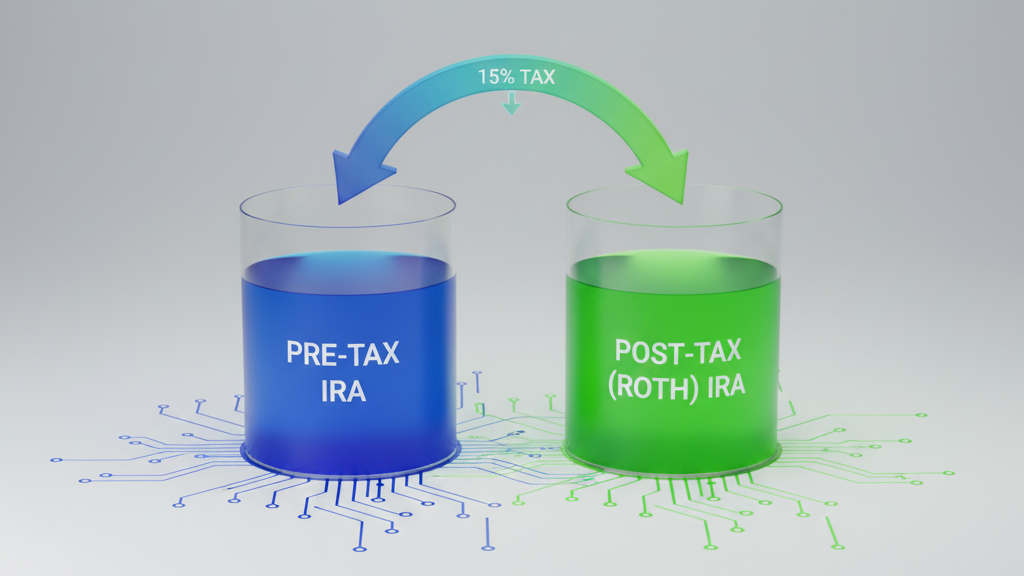
  • Planning the division of IRAs in divorce with attention to tax-free transfer rules, traditional vs. Roth considerations, and long-term retirement planning through Equitable Mediation. Call (877) 732-6682 for guidance.

    Dividing IRAs in Divorce

    Splitting IRAs in divorce seems straightforward, but there are tax traps and timing issues that can cost you thousands. Understanding the transfer process, avoiding early withdrawal penalties, and knowing your options will protect your retirement nest egg.