When you think about income for child support purposes, you probably picture your paycheck. But California takes a comprehensive view of what constitutes income. If you receive bonuses, stock compensation, rental income, investment returns, or other financial benefits beyond base salary, you need to understand how these affect your support calculation.
As a divorce mediator with an MBA in Finance, I regularly help parents navigate these income complexities. While I can’t provide legal advice, I can walk you through how California approaches income for child support purposes and what you’ll need to disclose during your divorce.
California’s Comprehensive Approach to Income
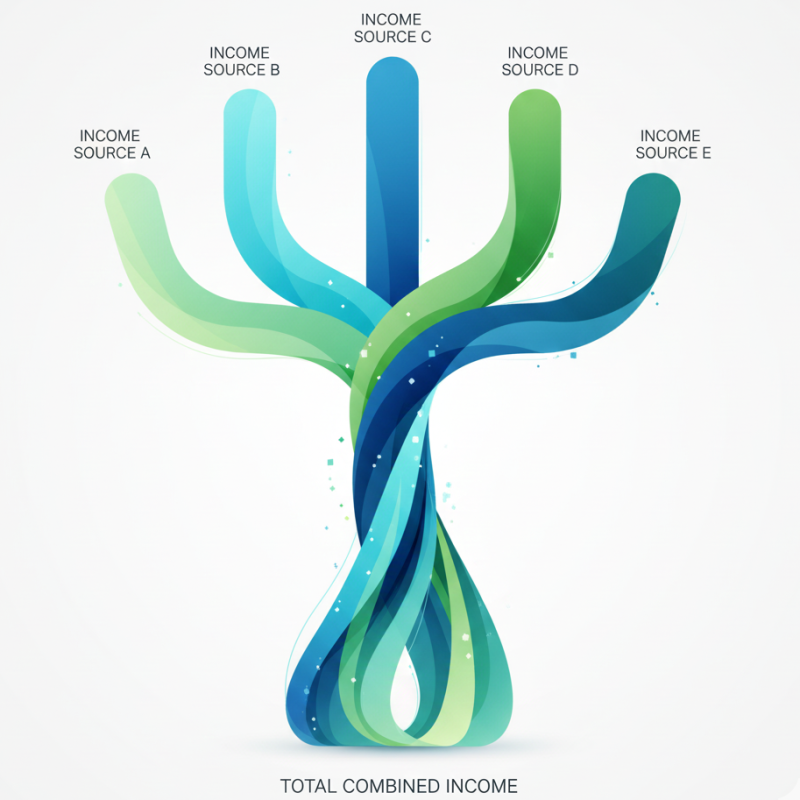
How California handles child support calculations involves looking at money or benefits from all sources, with few exceptions. This reflects that children should share in their parents’ actual standard of living.
What gets considered as income includes salaries, wages, commissions, bonuses, dividends, interest, rental income, business profits, pension payments, spousal support from previous relationships, unemployment benefits, disability benefits, and workers’ compensation.
This comprehensive approach means you can’t structure your financial life to minimize apparent income for child support purposes. Whether the money comes as a paycheck, a dividend check, a rental deposit, or equity compensation, it matters for your calculation.
Bonuses and Commissions: Irregular but Still Income
If you receive bonuses or commissions in addition to your base salary, these amounts factor into your child support calculations. Even though bonuses and commissions may vary, they represent real income.
For consistent annual bonuses, the average bonus amount typically gets factored into your monthly income calculation. If you’ve received bonuses of $15,000, $18,000, and $20,000 over the past three years, that $18,000 average becomes part of your picture, adding $1,500 monthly to your income calculation.
Performance-based commissions get handled similarly through averaging. One-time bonuses, or signing bonuses, require more nuanced treatment depending on whether they represent ongoing income patterns or truly one-time events.
Stock Options, RSUs, and Equity Compensation: Where Financial Expertise Matters

Equity compensation definitely matters for child support purposes, but analyzing it correctly requires financial sophistication that most people lack. This is where having a mediator with an MBA in Finance becomes invaluable.
Generally, California treats Restricted Stock Units as income in the year they vest. If you have RSUs worth $40,000 that vest this year, that $40,000 counts as income for this year. But what if you have $100,000 vesting in one unusual year? Should that be averaged? How do we handle restricted stock that vests quarterly versus annually?
Stock options require even more analysis because their value depends on the difference between the exercise price and the current stock price. When you exercise and sell, the gain is included in income calculations. But determining when and how to account for unexercised options or underwater options requires financial expertise.
For equity compensation granted during marriage but vesting after separation, there are complex questions about whether the compensation is community or separate property that intersect with child support calculations. Getting this analysis wrong can result in either inflated support obligations or inadequate support for children.
Investment Income: Dividends, Interest, and Capital Gains
All forms of investment income factor into your income picture for child support calculations. This includes interest from savings accounts, bonds, or CDs, dividends from stock holdings, and capital gains from selling investments at a profit.
Even if you automatically reinvest dividends rather than taking them as cash, they still matter because you’re receiving value. The same principle applies to interest that compounds in savings or investment accounts.
Capital gains require analysis of whether they’re ongoing or one-time events. Selling your entire investment portfolio in a single year, yielding $200,000, is likely not representative of ongoing income. But regular investment activities that generate $20,000 in capital gains annually are part of your income picture.
Investment income from assets you owned before marriage or inherited still factors into child support calculations, though it may be characterized as separate property for division purposes.
Rental Income and Real Estate Cash Flow
If you own rental property, the net income from that property factors into your income calculations. Determining net rental income requires proper accounting for legitimate expenses against gross rents received.
What is considered includes deducting actual operating expenses, such as property taxes, insurance, repairs and maintenance, property management fees, and utilities if you pay them, for example, if your rental property generates $3,000 monthly but incurs $1,200 in legitimate expenses, the $1,800 net income factors into child support.
Mortgage principal payments typically don’t reduce the income calculation because they represent building equity. However, mortgage interest does. Depreciation on rental property often gets added back because it’s a non-cash expense that doesn’t reduce your actual cash flow.
Retirement Distributions and Pension Income
If you’re receiving distributions from retirement accounts or pension income, these amounts generally factor into child support calculations. Social Security retirement benefits get included, as do pension payments from private or public retirement systems.
Distributions from IRAs or 401(k)s require more analysis. Required minimum distributions clearly factor in. Voluntary early distributions may be questioned as to whether they represent regular income or a temporary strategy to access funds.
Disability benefits through Social Security Disability Insurance or private disability insurance factor in because they replace your earning capacity.
Employee Benefits and Perquisites
Certain non-cash employee benefits can be counted if they provide economic value. If your employer provides a company car you use personally, the personal use portion represents income. The same applies to employer-provided housing or housing allowances.
Expense accounts that exceed actual business expenses, or reimbursements including personal expenditures, can factor into calculations. Employer contributions to retirement accounts generally don’t get counted as current income for support purposes because you can’t access those funds currently.
Unemployment and Government Benefits
Unemployment benefits factor into income calculations during the period you’re receiving them. The same is true for workers’ compensation benefits, state disability insurance payments, and most other government benefit programs.
There are exceptions. Needs-based public assistance programs like CalFresh or Temporary Assistance for Needy Families generally don’t get counted because they meet basic needs at subsistence levels.
How Mediation Handles Complex Income Situations Better Than Litigation
When your income picture involves anything beyond straightforward W-2 wages, mediation offers significant advantages over the adversarial court system.
In litigation, you’re trying to explain complex compensation structures to lawyers who then argue about it in front of someone who has limited time to understand your financial situation. Equity compensation, rental property accounting, investment strategies, variable bonuses—these topics get oversimplified or mischaracterized in the adversarial process. You lose control over decisions that profoundly affect your financial future.
In mediation with someone with deep financial expertise, we can spend the time needed to accurately understand your complete income picture. My background in finance means I can analyze equity compensation vesting schedules, properly evaluate rental property cash flow, distinguish between ongoing investment income and one-time gains, and help both parents understand how various income sources should be characterized.
This isn’t about hiding income or gaming the system. It’s about getting the analysis right so child support accurately reflects the actual earning capacity. Both parents benefit from this precision. The paying parent isn’t stuck with obligations based on inflated or mischaracterized income, while the receiving parent isn’t shortchanged because complexity obscures actual earnings.
We can also have detailed conversations about income sources that aren’t purely straightforward. Maybe you have rental income from a property you’re still managing, which is temporarily suppressing net income. Perhaps you have equity compensation that vests irregularly. We can discuss these nuances and find approaches that are fair to everyone.
Preparing Your Complete Income Picture

When preparing for mediation, you’ll need to gather documentation for all your income sources. This means more than just pay stubs. You’ll need tax returns showing investment income, rental income, and other sources of income. You’ll need brokerage statements showing dividends and interest. If you receive equity compensation, you’ll need documentation of vesting schedules and values.
California’s Income and Expense Declaration form is designed to capture a comprehensive picture. Take time to complete it thoroughly and accurately. If you’re unsure whether something should be included, list it and be prepared to discuss it rather than omitting it and risking accusations of non-disclosure.
In mediation, transparency serves everyone. Both parents need to understand the complete financial picture to have informed discussions about child support. When you openly share information about all your income sources, it builds trust and facilitates productive negotiations rather than creating suspicion.
Moving Forward with Clarity and Confidence
Once all income sources are identified and valued correctly, they feed into California’s guideline calculator along with your spouse’s income and your timeshare arrangement. Understanding that California looks at income comprehensively helps you prepare for realistic support discussions.
This comprehensive approach serves both parents and children. It ensures child support reflects parents’ actual financial capacity rather than just base salaries. Children deserve to share in their parents’ full standard of living, whether that comes from wages, investments, real estate, or other sources.
If your income picture involves complexity beyond base salary—bonuses, equity compensation, rental properties, investment income, or any combination thereof—mediation with genuine financial expertise makes the difference between confusion and clarity. We actively guide you through determining how each income source should be characterized and valued, ensuring nothing gets misrepresented in either direction.
When you approach divorce mediation with a comprehensive understanding of how California defines income, and you work with someone who has the financial expertise to analyze that income accurately, you’re positioned to reach fair agreements that serve your children while respecting both parents’ actual financial realities.

FAQs About California Child Support
About the Authors – Divorce Mediators You Can Trust
Equitable Mediation Services is a trusted and nationally recognized provider of divorce mediation, serving couples exclusively in California, New Jersey, Washington, New York, Illinois, and Pennsylvania. Founded in 2008, this husband-and-wife team has successfully guided more than 1,000 couples through the complex divorce process, helping them reach amicable, fair, and thorough agreements that balance each of their interests and prioritizes their children’s well-being. All without involving attorneys if they so choose.
At the heart of Equitable Mediation are Joe Dillon, MBA, and Cheryl Dillon, CPC—two compassionate, experienced professionals committed to helping couples resolve divorce’s financial, emotional, and practical issues peacefully and with dignity.

Joe Dillon, MBA – Divorce Mediator & Negotiation Expert
As a seasoned Divorce Mediator with an MBA in Finance, Joe Dillon specializes in helping clients navigate complex parental and financial issues, including:
- Physical and legal custody
- Spousal support (alimony) and child support
- Equitable distribution and community property division
- Business ownership
- Retirement accounts, stock options, and RSUs
Joe’s unique blend of financial acumen, mediation expertise, and personal insight enables him to skillfully guide couples through complex divorce negotiations, reaching fair agreements that safeguard the family’s emotional and financial well-being.
He brings clarity and structure to even the most challenging negotiations, ensuring both parties feel heard, supported, and in control of their outcome. This approach has earned him a reputation as one of the most trusted names in alternative dispute resolution.

Cheryl Dillon, CPC – Certified Divorce Coach & Life Transitions Expert
Cheryl Dillon is a Certified Professional Coach (CPC) and the Divorce Coach at Equitable Mediation. She earned a bachelor’s degree in psychology and completed formal training at The Institute for Professional Excellence in Coaching (iPEC) – an internationally recognized leader in the field of coaching education.
Her unique blend of emotional intelligence, coaching expertise, and personal insight enables her to guide individuals through divorce’s emotional complexities compassionately.
Cheryl’s approach fosters improved communication, reduced conflict, and better decision-making, equipping clients to manage divorce’s challenges effectively. Because emotions have a profound impact on shaping the divorce process, its outcomes, and future well-being of all involved.
What We Offer: Flat-Fee, Full-Service Divorce Mediation
Equitable Mediation provides:
- Full-service divorce mediation with real financial expertise
- Convenient, online sessions via Zoom
- Unlimited sessions for one customized flat fee (no hourly billing surprises)
- Child custody and parenting plan negotiation
- Spousal support and asset division mediation
- Divorce coaching and emotional support
- Free and paid educational courses on the divorce process
Whether clients are facing financial complexities, looking to safeguard their children’s futures, or trying to protect everything they’ve worked hard to build, Equitable Mediation has the expertise to guide them towards the outcomes that matter most to them and their families.
Why Couples Choose Equitable Mediation
- 98% case resolution rate
- Trusted by over 1,000 families since 2008
- Subject-matter experts in the states in which they practice
- Known for confidential, respectful, and cost-effective processes
- Recommendations by therapists, financial planners, and former clients
Equitable Mediation Services operates in:
- California: San Francisco, San Diego, Los Angeles
- New Jersey: Bridgewater, Morristown, Short Hills
- Washington: Seattle, Bellevue, Kirkland
- New York: NYC, Long Island
- Illinois: Chicago, North Shore
- Pennsylvania: Philadelphia, Bucks County, Montgomery County, Pittsburgh, Allegheny County
Schedule a Free Info Call to learn if you’re a good candidate for divorce mediation with Joe and Cheryl.