When you’re facing divorce in New York with children involved, one of your biggest questions is: “How much will child support be?” The answer starts with understanding what income actually counts—and in New York, the definition is broader than most people realize.
This isn’t just about your salary. New York takes a comprehensive approach to defining income, which means you need to understand both what counts and what is deducted. As someone with an MBA in finance, I’ve helped countless couples navigate these calculations in mediation, and getting this right from the start makes all the difference.
How New York Approaches Child Support
New York uses the Child Support Standards Act (CSSA), which applies an income shares model. Both parents’ incomes are combined, then a percentage is applied based on the number of children.
For 2025, New York applies these percentages to combined parental income up to $183,000: 17% for one child, 25% for two children, 29% for three children, 31% for four children, and at least 35% for five or more children. What trips people up is that the income used in this calculation isn’t what you report on your tax return, and it’s definitely not your take-home pay.
What Income Gets Counted
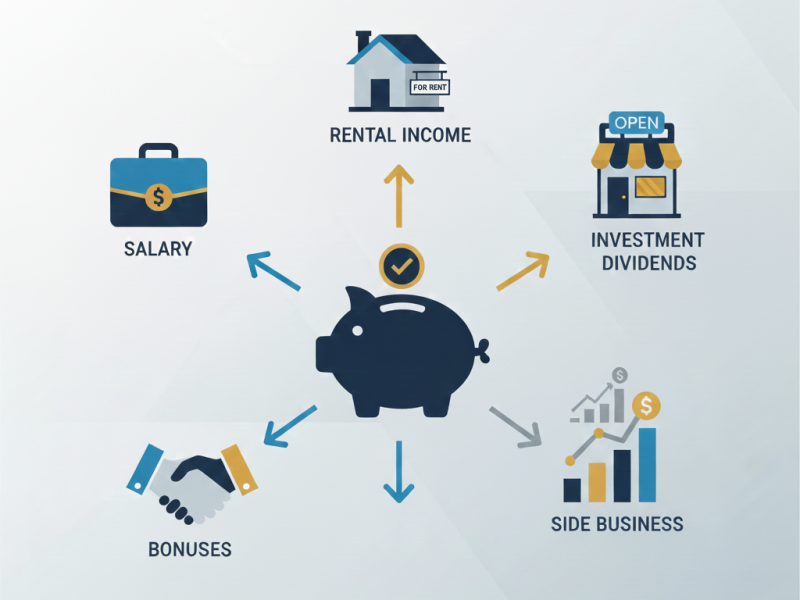
New York takes a comprehensive approach. The starting point is your gross income—what you reported (or should have reported) on your most recent federal tax return. This includes wages, salary, bonuses, and commissions. But it doesn’t stop there.
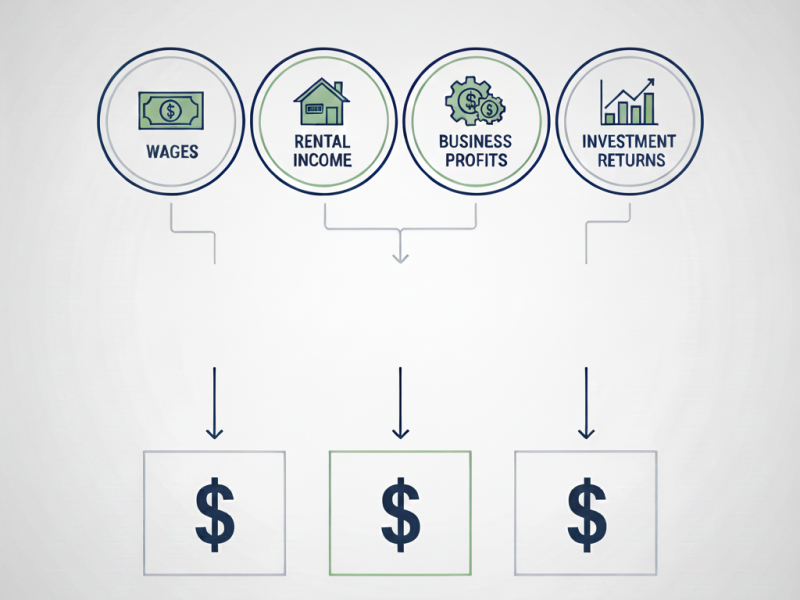
Self-employment income, business income, investment income from stocks or bonds, and rental income all count. So do workers’ compensation, disability benefits, unemployment insurance, Social Security benefits, veterans benefits, pensions, retirement income, fellowships, stipends, and annuity payments.
Here’s where financial expertise matters: New York also considers “perquisites”—employer-provided benefits such as meals, lodging, company cars, or club memberships. If these benefits reduce your personal expenses or provide economic value, they can count as income. The question is: does this benefit put money in your pocket or reduce what you’d otherwise spend?
CSSA Income vs. Taxable Income: A Critical Difference
Your CSSA income for child support is not the same as your taxable income. For taxes, you get numerous deductions—mortgage interest, charitable contributions, and retirement contributions. For child support? Those don’t apply.
New York uses “adjusted gross income,” which starts with your gross income and subtracts only specific allowable deductions. This means tax planning strategies that minimize your tax liability don’t reduce your child support income. The calculation focuses on your actual earning capacity, not your tax optimization.
Allowable Deductions
New York permits only specific deductions when calculating adjusted gross income. The most common are FICA taxes—Social Security and Medicare. These mandatory payroll deductions come right off the top.
If you live in New York City or Yonkers, you can deduct local income taxes. Note that state and federal income taxes are not deductible for child support purposes.
Other allowable deductions include child support you’re paying for other children under a court order or written agreement, alimony or spousal maintenance paid to a former spouse (not in your current case), and unreimbursed employee business expenses that don’t reduce your personal living expenses.
For most W-2 employees, the calculation is straightforward: take your gross income and deduct approximately 9% for FICA and local taxes if applicable. If you earn $100,000 annually, your adjusted gross income would be roughly $91,000.
Self-Employment Income: Added Complexity
If you’re self-employed or own a business, the calculation becomes more complex. New York recognizes legitimate business expenses that reduce taxable income. However, not every tax deduction applies to child support.
The key is distinguishing genuine business expenses from personal expenses flowing through your business. New York adds back certain deductions, including depreciation amounts exceeding straight-line depreciation, and entertainment and travel expenses that reduce personal expenditures.
Example: You own a consulting business with $200,000 in gross income. You deduct $30,000 in expenses, resulting in $170,000 in net income on your tax return. But if $5,000 were business meals primarily benefiting you personally, and $3,000 represented accelerated depreciation, those get added back. Your CSSA income would be $178,000, not $170,000.
This isn’t about whether expenses are legitimate tax deductions—they may be perfectly appropriate. The question is whether they represent cash genuinely unavailable to you, or expenses providing personal economic benefit.
Rental Income Considerations
Many people assume rental income for child support equals what they report on Schedule E—rental income minus expenses and depreciation. Not quite.
New York considers rental income and allows deductions for genuine costs of maintaining the property for rental purposes. But depreciation—a paper loss, not an actual cash outlay—may not be fully deductible. If you provide substantial services beyond basic maintenance, the income may be treated differently.
Why Accurate Income Calculation Matters

Getting the income calculation right from the beginning sets the foundation for everything else. When couples enter mediation without a clear understanding of income calculation, they propose arrangements based on incomplete information, leading to frustration and agreements that may not hold up.
In mediation, we work through your actual financial situation together, examining income sources, identifying what counts, and calculating adjusted gross income accurately. This transparency helps both of you understand the numbers and creates trust.
Financial expertise makes this process smoother. With my background in finance and training from Harvard and MIT, I help you understand the nuances that matter for your specific situation—whether dealing with variable compensation, equity awards, business income, or multiple income sources.
Beyond the Basic Calculation
Income calculation is just the first step. New York also requires parents to share certain expenses beyond basic child support: children’s health insurance costs, unreimbursed medical expenses, and work-related childcare expenses. These get divided between you proportionally based on your respective incomes.
Understanding your complete picture—basic support plus add-ons—helps you plan realistically and ensures fair contributions to your children’s needs.
The Mediation Advantage
In litigation, you submit financial affidavits, attorneys argue over what counts as income, and a stranger makes decisions about your finances without understanding your family. The process is expensive, adversarial, and often produces ill-fitting results.
Mediation offers a different path. We examine your financial situation together in a transparent manner. You both see the same information, understand the calculations, and discuss what makes sense for your family. When questions arise about income or variable compensation, we work through them collaboratively.
This approach is especially valuable with complex income situations. If you have bonuses, stock options, restricted stock units, or equity compensation, determining child support income requires careful analysis. In mediation, we explore these complexities and find solutions that work for both of you and reflect your actual financial reality.
Moving Forward with Confidence
Understanding how New York calculates child support income helps you make informed decisions. You’ll know what to expect, can plan accordingly, and can engage meaningfully during mediation.
Every family’s financial situation is unique. We don’t use one-size-fits-all approaches. Whether you’re dealing with straightforward W-2 income or complex compensation structures, we develop a personalized mediation plan tailored to your specific circumstances.
Choose mediation and keep control of your family’s financial future. Work with a mediator who combines advanced financial training with extensive divorce mediation experience to guide you through these calculations accurately and fairly. Your children deserve parents who move forward cooperatively, and you deserve a process that preserves resources for your family rather than diverting them to legal battles. If you’re ready to take a peaceful path that gives you control over decisions affecting your children’s future, let’s discuss how mediation can help you navigate child support and all the other vital issues in your divorce.

FAQs About New York Child Support
About the Authors – Divorce Mediators You Can Trust
Equitable Mediation Services is a trusted and nationally recognized provider of divorce mediation, serving couples exclusively in California, New Jersey, Washington, New York, Illinois, and Pennsylvania. Founded in 2008, this husband-and-wife team has successfully guided more than 1,000 couples through the complex divorce process, helping them reach amicable, fair, and thorough agreements that balance each of their interests and prioritizes their children’s well-being. All without involving attorneys if they so choose.
At the heart of Equitable Mediation are Joe Dillon, MBA, and Cheryl Dillon, CPC—two compassionate, experienced professionals committed to helping couples resolve divorce’s financial, emotional, and practical issues peacefully and with dignity.

Joe Dillon, MBA – Divorce Mediator & Negotiation Expert
As a seasoned Divorce Mediator with an MBA in Finance, Joe Dillon specializes in helping clients navigate complex parental and financial issues, including:
- Physical and legal custody
- Spousal support (alimony) and child support
- Equitable distribution and community property division
- Business ownership
- Retirement accounts, stock options, and RSUs
Joe’s unique blend of financial acumen, mediation expertise, and personal insight enables him to skillfully guide couples through complex divorce negotiations, reaching fair agreements that safeguard the family’s emotional and financial well-being.
He brings clarity and structure to even the most challenging negotiations, ensuring both parties feel heard, supported, and in control of their outcome. This approach has earned him a reputation as one of the most trusted names in alternative dispute resolution.

Cheryl Dillon, CPC – Certified Divorce Coach & Life Transitions Expert
Cheryl Dillon is a Certified Professional Coach (CPC) and the Divorce Coach at Equitable Mediation. She earned a bachelor’s degree in psychology and completed formal training at The Institute for Professional Excellence in Coaching (iPEC) – an internationally recognized leader in the field of coaching education.
Her unique blend of emotional intelligence, coaching expertise, and personal insight enables her to guide individuals through divorce’s emotional complexities compassionately.
Cheryl’s approach fosters improved communication, reduced conflict, and better decision-making, equipping clients to manage divorce’s challenges effectively. Because emotions have a profound impact on shaping the divorce process, its outcomes, and future well-being of all involved.
What We Offer: Flat-Fee, Full-Service Divorce Mediation
Equitable Mediation provides:
- Full-service divorce mediation with real financial expertise
- Convenient, online sessions via Zoom
- Unlimited sessions for one customized flat fee (no hourly billing surprises)
- Child custody and parenting plan negotiation
- Spousal support and asset division mediation
- Divorce coaching and emotional support
- Free and paid educational courses on the divorce process
Whether clients are facing financial complexities, looking to safeguard their children’s futures, or trying to protect everything they’ve worked hard to build, Equitable Mediation has the expertise to guide them towards the outcomes that matter most to them and their families.
Why Couples Choose Equitable Mediation
- 98% case resolution rate
- Trusted by over 1,000 families since 2008
- Subject-matter experts in the states in which they practice
- Known for confidential, respectful, and cost-effective processes
- Recommendations by therapists, financial planners, and former clients
Equitable Mediation Services operates in:
- California: San Francisco, San Diego, Los Angeles
- New Jersey: Bridgewater, Morristown, Short Hills
- Washington: Seattle, Bellevue, Kirkland
- New York: NYC, Long Island
- Illinois: Chicago, North Shore
- Pennsylvania: Philadelphia, Bucks County, Montgomery County, Pittsburgh, Allegheny County
Schedule a Free Info Call to learn if you’re a good candidate for divorce mediation with Joe and Cheryl.