featIf you’re a business owner or self-employed professional facing divorce in New York, calculating child support is more complex than for W-2 employees. Your income fluctuates, business expenses blur the lines between professional and personal, and tax returns don’t always tell the complete story. Understanding how New York approaches self-employment income is essential to reaching a fair agreement.

How New York Defines Income for Self-Employed Parents

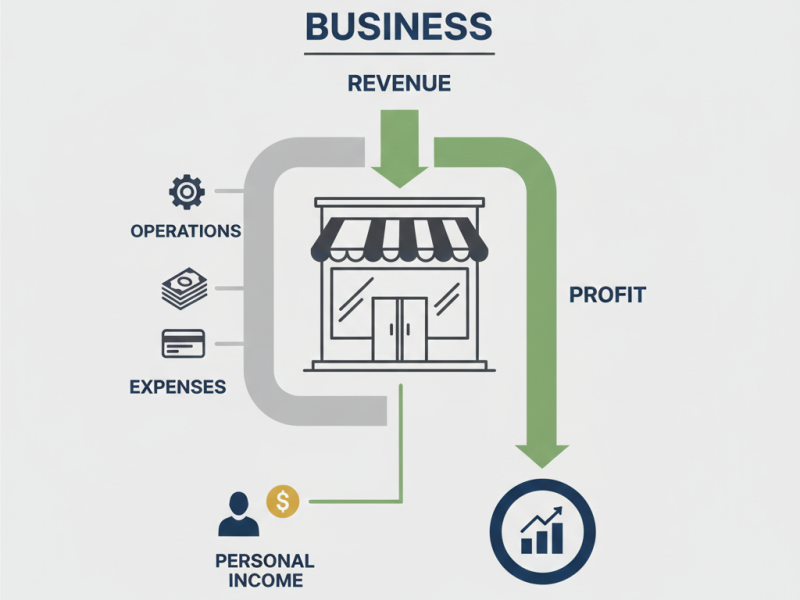
In New York, child support calculations use Child Support Standards Act income. For business owners, this includes all business income before expenses are deducted—wages or salary you pay yourself, business profits or distributions, and any other compensation from business operations.

The starting point is your tax returns: Schedule C for sole proprietors, or K-1s for partnerships and S corporations. However, tax returns aren’t the final word.

New York applies percentages to combined parental income up to $183,000: 17 percent for one child, 25 percent for two, 29 percent for three, increasing for additional children. For income above $183,000, treatment becomes a matter for negotiation based on the children’s needs.

The Add-Back Question: What Business Expenses Count?
Understand which business expenses are added back when calculating child support for self-employed parents in New York. Call Equitable Mediation at (877) 732-6682 for mediation guidance.

Not every expense that reduces your taxable income for IRS purposes reduces your income for child support purposes in New York. The state adds explicitly back certain self-employment deductions that provide personal benefits.

New York law explicitly addresses two categories. First, depreciation deductions that exceed straight-line depreciation get added back. If you’re using accelerated depreciation methods to reduce your taxable income faster than the asset actually loses value, that excess gets added back for child support purposes.

Second, entertainment and travel allowances get added back to the extent they reduce your personal expenditures. If you’re deducting business meals you would have eaten anyway, travel that combines business with personal vacation, or vehicle expenses for a car you drive for both business and personal use, the portion providing personal benefit gets added back.

Beyond these statutory add-backs, what counts as reasonable versus unreasonable business expenses becomes a key negotiation point. Equipment purchases that genuinely expand your business capacity are typically accepted as legitimate. Salaries paid to family members who perform actual work at market rates are generally considered reasonable. Professional fees, insurance, and operational costs necessary to run your business usually aren’t questioned.

However, excessive expenses that seem designed to reduce your apparent income artificially raise concerns. Paying yourself a minimal salary while reinvesting heavily in the business right before or during divorce proceedings invites scrutiny. Suddenly deducting large amounts for equipment or renovations that weren’t part of your regular pattern creates suspicion. Running personal expenses through your business account undermines your credibility.

The Lifestyle Analysis Reality

Lifestyle analysis compares your actual living expenses against reported income. If you report earning $50,000 annually but maintain a $4,000 monthly mortgage, drive a luxury vehicle, and live a $100,000 lifestyle, the numbers don’t match. Bank statements and spending patterns reveal what your income actually supports.

This isn’t about catching people in lies. Business owners sometimes don’t realize how much personal benefit flows through business deductions—such as cell phones, vehicles, meals, and home offices. That’s thoughtful tax planning, but those benefits represent real income for child support purposes.

Why Documentation Matters

Prepare accurate financial records for child support calculations as a business owner through mediation with Equitable Mediation. Call (877) 732-6682 to discuss your situation.

Thorough documentation is your most important asset. The burden of proving your income rests on you as the business owner.

You’ll need at least 3 years of personal and business tax returns, including all schedules. Profit and loss statements prepared by an accountant carry more weight. Bank statements for business and personal accounts help complete the picture. Corporate entities need to file corporate tax returns and prepare financial statements.

Clear separation between business and personal expenses protects you. Mixing personal purchases into business accounts or paying yourself irregularly creates ambiguity that rarely works in your favor.

For variable income businesses, multiple years establish patterns. If your income genuinely fluctuates based on market conditions or projects, documentation is crucial. One unusual year shouldn’t define an ongoing obligation if it doesn’t reflect the typical earning capacity.

How Business Structure Affects Income Evaluation

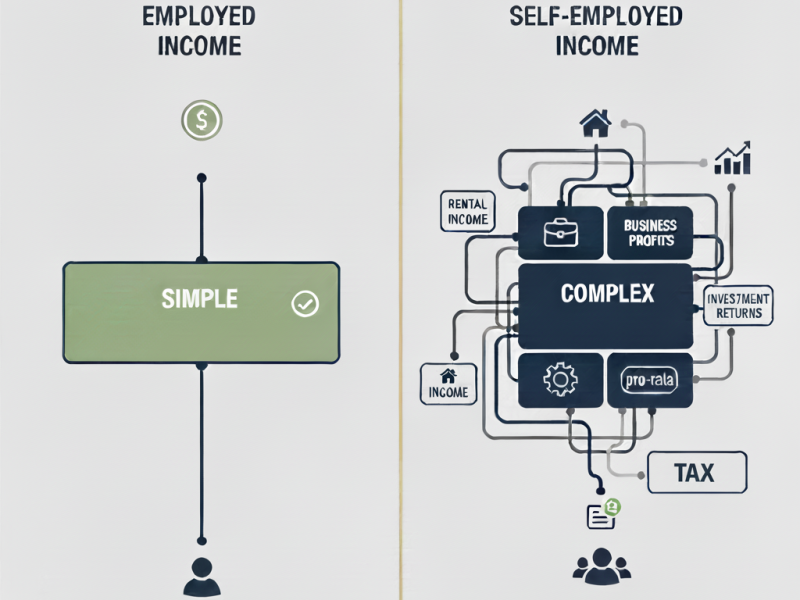
How your business is structured affects income evaluation. Sole proprietors report via Schedule C, making business income straightforward but requiring careful distinction between legitimate and personal expenses.

Partnerships use K-1 forms to show distributive shares. What matters is what you were entitled to take, not just what you withdrew. Money left in the partnership may still count as available income.

S corporations are unique. You might pay yourself a modest W-2 salary while taking larger distributions. Both get examined. If your salary seems unreasonably low, your income might be attributed to reasonable compensation for your work.

Regardless of structure, how you organize compensation for tax purposes doesn’t necessarily control for child support purposes.

Transparency as Strategy in Mediation

When navigating child support as a business owner, transparency is your most effective strategy.

Attempting to hide income or inflate expenses typically backfires. The tools for uncovering financial manipulation are sophisticated, and consequences extend beyond paying correct support. Discovery destroys credibility on every divorce issue.

More importantly, manipulation creates adversarial dynamics that make mediation impossible. Once trust breaks, you’re headed for litigation, where you lose control and spend more.

In mediation, complete transparency creates productive negotiation. When both parents see the whole financial picture, honest conversations about reasonable support become possible. You can discuss averaging variable income, distinguishing necessary from discretionary expenses, and handling legitimate reinvestment needs.

With my finance background and MBA, I’ve helped business-owning couples navigate these complexities. We analyze financials together, discuss reasonable expenses, and create a shared understanding of available income. This collaborative approach maintains credibility while protecting legitimate business interests.

Practical Approaches for Business Owners
Resolve complex child support issues for business owners through divorce mediation with Equitable Mediation. Call (877) 732-6682 to create a fair and cooperative agreement.

Several strategies help business owners reach fair agreements. Using multiple years of returns to calculate average income smooths fluctuations. If your business is seasonal or project-based, averaging provides accuracy.

Agreeing on reasonable expenses before calculating support saves conflict. Rather than arguing line items, discuss expense categories and reach an agreement on deductions versus add-backs.

Including review provisions in building contracts makes sense for variable-income projects. Annual or biennial reviews with adjustment provisions protect both parents and ensure appropriate support as circumstances evolve.

For businesses that need genuine reinvestment, mediation enables creative solutions. You might base support on actual distributions rather than total income, or agree to higher support when business is strong, with provisions for lean periods. These flexible approaches aren’t available in litigation.

Moving Forward with Confidence

Child support calculations for self-employed parents and business owners in New York require navigating complex financial territory. What counts as income, which expenses are deductible, and how to present your financial picture accurately all require careful consideration and expertise.

Mediation offers a path to work through these complexities while maintaining control over the outcome. Rather than having decisions made for you based on rigid formulas applied to financial information that may not capture your complete situation, you can engage in informed discussions about what’s fair and workable for your family.

With expertise in both financial analysis and mediation, we help business-owning couples create child support agreements that accurately reflect income, account for legitimate business needs, and provide appropriate support for children. The combination of financial acumen and mediation skills allows us to guide you through the technical aspects while facilitating the difficult conversations that arise when finances are complex.

If you’re a business owner facing divorce in New York, the path forward doesn’t have to mean contentious litigation over financial records and arguments about every business expense. Mediation provides an opportunity to approach these issues transparently, negotiate fairly, and reach agreements that work for both parents while adequately supporting your children.

“You may have researched how alimony works in your state. But in my experience, regardless of whether a state offers guidance on how to resolve alimony, often, couples negotiate their own agreement tailored to their unique situation and circumstances.

So you have a lot of flexibility and can maintain a lot of control if you negotiate the terms of alimony out of court with the help of a skilled professional using an alternative dispute resolution process like divorce mediation or a collaborative divorce .

You and your soon-to-be ex-spouse will more likely come to an alimony arrangement that's acceptable to both of you."

Joe Dillon headshot

Joe Dillon | Divorce Mediator & Founder

FAQs About New York Child Support

New York calculates child support using the Child Support Standards Act (CSSA), which employs a percentage-based formula applied to the combined parental income. Under Domestic Relations Law Section 240 and Family Court Act Section 413, New York applies specific percentages based on the number of children requiring support: 17% for one child, 25% for two children, 29% for three children, 31% for four children, and 35% for five or more children. These percentages are applied to the parents’ combined income up to a statutory cap, which is $183,000 as of 2025.

The calculation begins with determining each parent’s gross income, which includes wages, salaries, bonuses, commissions, self-employment income, investment returns, rental income, retirement distributions, and many other income sources. From gross income, New York permits certain deductions to arrive at income available for support: primarily FICA taxes (Social Security and Medicare), local income taxes for New York City and Yonkers residents, and child support or maintenance paid for other children or a previous spouse. Once each parent’s adjusted income is calculated, these amounts are combined. The CSSA percentage for the number of children is applied to this combined income to determine the basic support obligation. Each parent’s share is proportional to their percentage of the combined income.

New York’s Self-Support Reserve (SSR) is a critical protection ensuring child support orders don’t reduce the paying parent’s income below a basic subsistence level. As of March 1, 2025, the SSR is $21,128 annually (increased from $20,331 in 2024, a 3.9% inflation adjustment). Courts must ensure that after paying child support, the obligor retains income at least equal to the SSR. If the guideline calculation would drop the paying parent below this threshold, the court must reduce the support amount accordingly.

The SSR serves several important functions. First, it recognizes that parents unable to meet their own basic needs cannot maintain employment and will ultimately be unable to pay any support. Second, it maintains work incentives: without the SSR, low-wage workers might find that working only marginally increases their available income after support. Third, it acknowledges human dignity—even parents who owe support deserve to maintain subsistence-level income. The SSR interacts with another threshold: the Federal Poverty Level, which is $15,650 for a single person in 2025. Parents earning below the poverty level may receive poverty orders of just $25 per month, while those earning between the poverty level and the SSR might receive minimum orders of $50 per month.

New York differs from most states in requiring child support until age 21, not 18. Under New York law, the duty to support generally continues until the child turns 21 or becomes emancipated, whichever occurs first. This extended obligation recognizes that many young adults are still dependent during college years or while establishing themselves in the workforce. Emancipation can occur earlier than age 21 through several paths: if the child marries, enters military service, or becomes self-supporting and living independently.

It’s crucial to understand that support doesn’t automatically stop when the child turns 21—parents must file for modification or termination, or the order will continue in effect and arrears will accrue. New York child support orders typically specify an end date, but enforcement continues beyond that date unless the order is formally terminated. For children with disabilities that prevent self-support, courts can order support to continue indefinitely beyond age 21. The obligation to support until 21 is one of New York’s most distinctive family law features and often comes as a surprise to parents expecting obligations to end at 18.

Beyond the basic child support obligation calculated using CSSA percentages, New York courts routinely order parents to share additional expenses called add-ons or mandatory additional expenses. These include childcare costs necessary for the custodial parent to work or attend school, the children’s health insurance premiums, unreimbursed medical and dental expenses not covered by insurance, and educational expenses. These add-ons are divided between parents proportionally based on their respective incomes—the same proportion used to calculate basic support.

For childcare, courts consider only reasonable expenses actually incurred to allow a parent to work or pursue education that will lead to employment. Health insurance is another major category: if either parent can obtain coverage for the children through employment at reasonable cost, courts will order that parent to maintain the coverage, with both parents sharing the premium cost proportionally. Unreimbursed medical expenses—copays, deductibles, prescription medications, therapy, orthodontics, vision care—are typically split proportionally as well. Some orders specify a minimum threshold before cost-sharing obligations begin. College expenses receive special treatment—while not automatically included in child support, courts have authority to order parents to contribute to post-secondary education costs under certain circumstances.

When parents’ combined income exceeds New York’s statutory cap of $183,000, courts handle child support differently than for income below the cap. For the first $183,000 of combined income, courts must apply the CSSA percentages unless there are grounds for deviation. For income above $183,000, courts have discretion rather than obligation to apply the percentages. Courts typically calculate support in two steps for high-income cases.

First, they apply the CSSA percentages to the first $183,000 and determine each parent’s proportional share. Then, for the amount exceeding $183,000, courts consider multiple factors: the children’s actual needs and lifestyle prior to the parents’ separation, whether the children have special needs requiring additional resources, the parents’ pre-separation standard of living, and the custodial parent’s ability to provide for the children’s needs. Courts may apply the full CSSA percentages to the excess income, apply reduced percentages, or decline to apply the formula at all, instead calculating what additional amount is necessary to meet the children’s documented needs. Courts require detailed financial documentation of the children’s actual expenses when income exceeds the cap.

Yes, New York child support orders can be modified when there has been a substantial change in circumstances. Under New York law, substantial changes include significant increases or decreases in either parent’s income (generally 15% or more is considered significant), involuntary job loss or career changes affecting earning capacity, changes in the children’s needs such as new medical conditions or educational requirements, and modifications to custody arrangements.

New York provides for automatic reviews every two years to account for cost of living adjustments, though these typically result in modest changes. Beyond these automatic reviews, either parent can petition for modification by filing in the court that issued the original order. It’s absolutely critical to understand that child support continues at the current ordered level until a court officially modifies it—you cannot unilaterally reduce payments because your income decreased. Any amounts that accrue while awaiting your modification hearing remain your legal obligation. Courts can only modify support prospectively from the date the modification petition was filed, not retroactively to when circumstances actually changed, so delays in filing can be costly.

Effective March 1, 2025, New York implemented important updates to child support calculations, primarily adjusting the Self-Support Reserve and Federal Poverty Level to account for inflation. The Self-Support Reserve increased from $20,331 to $21,128 annually, a 3.9% increase that ensures the minimum income threshold stays aligned with actual living costs. This adjustment affects low-income parents whose guideline support obligations might otherwise push them below subsistence level—with the higher reserve, more parents may qualify for reduced support amounts.

The Federal Poverty Level also increased from $15,060 to $15,650 for a single person in 2025. This threshold determines eligibility for poverty orders (typically $25 per month for parents earning below the poverty level). The child support worksheets and forms were updated to reflect these changes—Form UD-8(3) and related documents now incorporate the March 1, 2025 figures. What didn’t change in 2025: the CSSA percentages remain the same (17% for one child, 25% for two, etc.), and the combined parental income cap stays at $183,000. For middle and higher-income parents, the changes have minimal effect, but for parents with incomes near the poverty level or Self-Support Reserve, the adjustments can meaningfully impact support calculations.

New York has comprehensive child support enforcement mechanisms administered through the Division of Child Support Services (DCSS) under the Office of Temporary and Disability Assistance. The primary enforcement tool is income withholding: virtually all New York child support orders include automatic Income Withholding Orders (IWO) directing employers to deduct support from paychecks and remit it to the State Disbursement Unit, which then forwards payments to the custodial parent.

When parents fall behind on support, New York employs increasingly serious enforcement measures. The state intercepts federal and state tax refunds. New York can suspend various licenses including driver’s, professional and occupational, and recreational licenses. The state reports delinquent obligors to credit bureaus. For parents with passports, New York can request federal denial or revocation when arrears exceed $2,500. The state can place liens on real property, bank accounts, and other assets. For cases of willful non-payment, courts can hold parents in civil contempt, potentially resulting in incarceration. New York also participates actively in interstate enforcement under UIFSA—parents who move to other states remain subject to New York’s orders. Interest accrues on arrears at 9% per year.

Parents in New York can reach agreements about child support that differ from the CSSA guideline amounts, but these agreements face important limitations and judicial scrutiny. Under New York law, child support is considered a right of the child, not the parents, so courts must approve any agreement to ensure it serves the children’s best interests and meets their needs. When parents agree to support above the CSSA guidelines, courts generally approve these agreements readily.

However, agreements for amounts below the guideline face much stricter scrutiny. To approve a below-guideline agreement, courts must find that the agreed amount adequately meets the children’s needs and that application of the guideline would be unjust or inappropriate based on specific factors outlined in the CSSA statute. Section F of the CSSA lists ten factors courts may consider when deviating from guidelines. Parents seeking court approval must explain why they believe the guideline amount is inappropriate and how the agreed amount serves the children’s interests. Courts can reject these agreements if they find the amount inadequate. Child support cannot be waived entirely except in extraordinary circumstances.

New York’s approach to child support in equal or shared custody situations has evolved through case law, as the CSSA statute doesn’t explicitly address true 50/50 custody arrangements. When parents share physical custody equally or nearly equally, courts face the question of whether and how much child support should be ordered, given that both parents are incurring substantial direct expenses for the children. The general rule remains that the parent with less overnight time is the noncustodial parent who pays support to the custodial parent. In true 50/50 arrangements, the higher-earning parent is typically treated as the noncustodial parent and pays support to the lower-earning parent.

However, New York courts have recognized in cases like Bast v. Rossoff that strict application of the CSSA formula in equal custody situations may produce unjust results. Courts have authority to deviate from guideline amounts when the noncustodial parent demonstrates that expenses incurred during their equal parenting time substantially reduce the costs the custodial parent bears. This requires detailed financial evidence of what each parent spends on the children’s needs. What’s clear is that equal physical custody alone doesn’t eliminate child support obligations—the higher-earning parent will generally pay some support even with equal time, though the amount may be reduced from what strict guideline application would produce.

Lay the groundwork for a peaceful divorce

About the Authors – Divorce Mediators You Can Trust

Equitable Mediation Services is a trusted and nationally recognized provider of divorce mediation, serving couples exclusively in California, New Jersey, Washington, New York, Illinois, and Pennsylvania. Founded in 2008, this husband-and-wife team has successfully guided more than 1,000 couples through the complex divorce process, helping them reach amicable, fair, and thorough agreements that balance each of their interests and prioritizes their children’s well-being. All without involving attorneys if they so choose.

At the heart of Equitable Mediation are Joe Dillon, MBA, and Cheryl Dillon, CPC—two compassionate, experienced professionals committed to helping couples resolve divorce’s financial, emotional, and practical issues peacefully and with dignity.

Photo of mediator Joe Dillon at the center of the Equitable Mediation team, all smiling and poised around a conference table ready to assist. Looking for expert, compassionate divorce support? Call Equitable Mediation at (877) 732-6682 to connect with our dedicated team today.

Joe Dillon, MBA – Divorce Mediator & Negotiation Expert

As a seasoned Divorce Mediator with an MBA in Finance, Joe Dillon specializes in helping clients navigate complex parental and financial issues, including:

  • Physical and legal custody
  • Spousal support (alimony) and child support
  • Equitable distribution and community property division
  • Business ownership
  • Retirement accounts, stock options, and RSUs

Joe’s unique blend of financial acumen, mediation expertise, and personal insight enables him to skillfully guide couples through complex divorce negotiations, reaching fair agreements that safeguard the family’s emotional and financial well-being.

He brings clarity and structure to even the most challenging negotiations, ensuring both parties feel heard, supported, and in control of their outcome. This approach has earned him a reputation as one of the most trusted names in alternative dispute resolution.

Photo of Cheryl Dillon standing with the Equitable Mediation team in a bright conference room, all smiling and ready to guide clients through an amicable divorce process. For compassionate, expert support from Cheryl Dillon and our team, call Equitable Mediation at (877) 732-6682 today.

Cheryl Dillon, CPC – Certified Divorce Coach & Life Transitions Expert

Cheryl Dillon is a Certified Professional Coach (CPC) and the Divorce Coach at Equitable Mediation. She earned a bachelor’s degree in psychology and completed formal training at The Institute for Professional Excellence in Coaching (iPEC) – an internationally recognized leader in the field of coaching education.

Her unique blend of emotional intelligence, coaching expertise, and personal insight enables her to guide individuals through divorce’s emotional complexities compassionately.

Cheryl’s approach fosters improved communication, reduced conflict, and better decision-making, equipping clients to manage divorce’s challenges effectively. Because emotions have a profound impact on shaping the divorce process, its outcomes, and future well-being of all involved.

What We Offer: Flat-Fee, Full-Service Divorce Mediation

Equitable Mediation provides:

  • Full-service divorce mediation with real financial expertise
  • Convenient, online sessions via Zoom
  • Unlimited sessions for one customized flat fee (no hourly billing surprises)
  • Child custody and parenting plan negotiation
  • Spousal support and asset division mediation
  • Divorce coaching and emotional support
  • Free and paid educational courses on the divorce process

Whether clients are facing financial complexities, looking to safeguard their children’s futures, or trying to protect everything they’ve worked hard to build, Equitable Mediation has the expertise to guide them towards the outcomes that matter most to them and their families.

Why Couples Choose Equitable Mediation

  • 98% case resolution rate
  • Trusted by over 1,000 families since 2008
  • Subject-matter experts in the states in which they practice
  • Known for confidential, respectful, and cost-effective processes
  • Recommendations by therapists, financial planners, and former clients

Equitable Mediation Services operates in:

  • California: San Francisco, San Diego, Los Angeles
  • New Jersey: Bridgewater, Morristown, Short Hills
  • Washington: Seattle, Bellevue, Kirkland
  • New York: NYC, Long Island
  • Illinois: Chicago, North Shore
  • Pennsylvania: Philadelphia, Bucks County, Montgomery County, Pittsburgh, Allegheny County

Schedule a Free Info Call to learn if you’re a good candidate for divorce mediation with Joe and Cheryl.


Related Resources

  • Illustration of a California map overlayed with a house icon and dollar sign beside a mediator discussing spousal support options with a couple. Need clear guidance on alimony in California? Call Equitable Mediation at (877) 732-6682 to schedule your consultation today.

    Alimony in California: A Divorce Mediator’s Complete Guide to Navigating Spousal Support

    Find out how alimony in California works and how you can prevent your spousal support negotiation (and divorce) from turning into a disaster!

  • Illustration of a California map overlayed with a house icon and dollar sign beside a mediator discussing spousal support options with a couple. Need clear guidance on alimony in California? Call Equitable Mediation at (877) 732-6682 to schedule your consultation today.

    New Jersey Alimony Guide: How Spousal Support is Really Calculated

    Determining alimony in NJ is very challenging. Learn what you need to know about this complex topic and how to get a fair alimony agreement.

  • Illustration of a California map overlayed with a house icon and dollar sign beside a mediator discussing spousal support options with a couple. Need clear guidance on alimony in California? Call Equitable Mediation at (877) 732-6682 to schedule your consultation today.

    New York Alimony Negotiations: a Guide to Spousal Support Settlements

    Despite the use of a formula, agreeing on New York alimony is still difficult! Find out what you need to know and how to best resolve it.