When you’re trying to figure out how you’ll both make ends meet after divorce, one of the most confusing aspects is how child support and spousal support work together in California. It’s not as simple as calculating each one separately and adding them up. California’s guideline formula actually considers both types of support simultaneously.
As a divorce mediator with an MBA in Finance, I’ve watched countless couples struggle with this interplay. But here’s what I’ve learned: when you understand how these calculations interact, you gain a decisive advantage in mediation. You can craft solutions that work for your whole financial picture rather than treating these as separate conversations.
Understanding the Interplay Between Child Support and Spousal Support

How California approaches support calculations is unique. The guideline calculator treats spousal support payments as part of the income picture when determining child support, creating what financial analysts call a feedback loop where one calculation affects the other.
If you’re paying spousal support, that payment reduces your available income for child support purposes. If you’re receiving spousal support, that increases your income when the formula calculates your contribution to children’s support. This has real implications for your monthly budget.
Let me give you a concrete example. Imagine Parent A earns $10,000 monthly and Parent B earns $3,000 monthly. Without spousal support, the child support calculation might result in $1,800 per month from Parent A to Parent B. But if Parent A also pays $2,000 monthly in spousal support, that payment changes the income picture. Parent A now has $8,000 for child support purposes, and Parent B has $5,000. The child support calculation might drop to $1,200 per month because Parent B’s income has improved through spousal support.
This is why couples who negotiate these separately often find the numbers don’t work as expected when they actually run the full calculation.
How the Guideline Formula Handles Spousal Support Payments
How California’s guideline formula works adds spousal support to the recipient’s gross income and subtracts it from the payor’s gross income when calculating child support. When you enter financial information into DissoMaster or another guideline calculator, the software automatically makes these adjustments.
This adjustment recognizes that spousal support changes each spouse’s economic reality. The recipient has more money available to contribute to children’s expenses, while the payor has less because they’re already transferring funds to their former spouse.
For mediation purposes, this ensures you get an accurate picture of each parent’s actual financial capacity. When spousal support is appropriately included, the child support number reflects what each of you can actually afford based on your post-divorce income reality.
Why the Order of Calculations Matters for Your Family’s Budget
The order in which you address these calculations significantly impacts your family’s total financial picture. This is one of the most misunderstood aspects of California support calculations.
How California handles this involves calculating spousal support first. Once you establish a spousal support amount, that number becomes part of the income data used for child support calculation.
This means that if you change the spousal support amount, child support will change as well. It’s not one-to-one because the guideline formula considers factors like each parent’s timeshare percentage and other income sources. But these numbers are interconnected in ways most people don’t realize.
Using the example above, if we increased spousal support from $2,000 to $2,500 monthly, child support wouldn’t simply drop by $500. The new income split might shift child support to $1,000 monthly—a $200 reduction rather than $500. The relationship is proportional but not linear.
This creates both challenges and opportunities. You can’t lock in one number and calculate the other in isolation. But in mediation, you can look at the total support picture holistically and find creative solutions that work better than treating these as separate negotiations.
Temporary vs. Permanent Spousal Support: Different Financial Impacts
How California handles spousal support involves distinguishing between temporary and permanent support, and this distinction matters for child support calculations.
Temporary spousal support is typically calculated using a formula during the divorce process. In many California counties, this is roughly 40% of the higher earner’s net income minus 50% of the lower earner’s net income, though the formulas vary by county. This temporary support amount then flows into the child support calculation.
Permanent spousal support—better termed “post-divorce spousal support” since it’s rarely truly permanent—gets determined differently. What is considered includes factors such as the length of the marriage, each spouse’s earning capacity, age, health, and contributions to the other spouse’s education or career. Because permanent spousal support doesn’t follow a strict formula, there’s more room for negotiation.
This is where my financial background becomes particularly valuable. When negotiating permanent spousal support, I can model different scenarios to see how various spousal support amounts would impact child support and each spouse’s monthly budget. For instance, if we’re considering $1,500 versus $2,000 monthly in spousal support, I can show you exactly how that $500 difference affects the child support calculation and what your actual net positions would be after both payments.
This sophisticated modeling allows you to make informed trade-offs that work better for both of your budgets when you consider the whole picture.
How Litigation Handles This Interaction Poorly
In the adversarial litigation system, child support and spousal support are typically fought over separately by lawyers trained to maximize their clients’ positions on each issue. Your lawyer argues for the highest spousal support possible (or lowest, depending on which side you’re on) without fully considering how that impacts child support. Then you fight over child support as a separate battle.
This sequential, adversarial approach creates several problems. First, you might win your spousal support fight only to discover the resulting child support calculation leaves you worse off than a different combination would have. By the time you realize this, you’ve already spent months and thousands of dollars litigating the spousal support issue.
Second, litigation provides no mechanism for the sophisticated modeling that shows you how different combinations work. You’re arguing legal positions rather than analyzing financial realities. A judge makes decisions on each issue separately based on arguments from lawyers, with limited time to understand how the numbers interact for your specific situation.
Third, the adversarial process prevents the kind of collaborative problem-solving that leads to creative solutions. You might discover that slightly higher spousal support and slightly lower child support create a better overall picture for both of you. Still, litigation isn’t structured to find those win-win scenarios. It’s designed to produce winners and losers on each issue.
The Strategic Advantage of Discussing Both Supports Together in Mediation

One of the biggest mistakes couples make is trying to negotiate child support and spousal support in complete isolation. It’s like trying to balance a checkbook by looking at deposits and withdrawals separately without considering how they interact.
In mediation, we can discuss both types of support holistically. When you address both together, you can identify opportunities that might not be apparent otherwise. You might discover that a slightly different spousal support arrangement creates a child support calculation that better matches your actual childcare expenses and each parent’s financial capacity.
For example, I worked with a couple where the guideline spousal support would have been $2,500 monthly with resulting child support of $1,400 monthly—a total transfer of $3,900 monthly from the higher earner to the lower earner. But the lower earner had $2,000 monthly in childcare costs that weren’t fully captured in the base child support. By negotiating spousal support of $2,200 monthly instead, child support increased to $1,600 monthly, creating a total of $3,800 that better aligned with the actual expense picture. The higher earner paid $100 less per month, while the lower earner’s cash flow better matched their actual expenses.
This holistic approach also helps you avoid discovering at the end of negotiations that the numbers don’t work as you thought they would. By considering the interaction from the beginning, you can model different scenarios and choose the path that makes the most financial sense for your specific situation.
Creating Solutions That Work for Your Whole Financial Picture
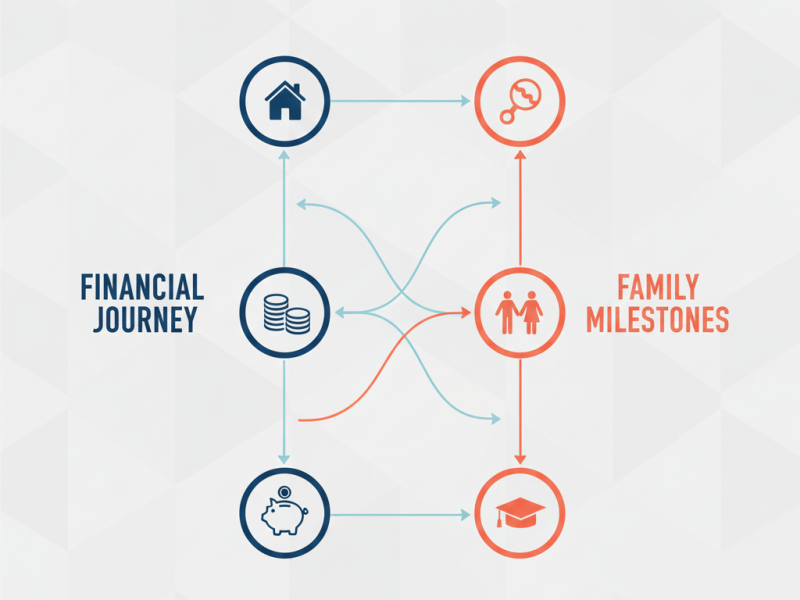
While you need to understand how California’s guideline formula works, in mediation, you can craft agreements that make sense for your family when both parties understand what they’re agreeing to and the arrangement serves the children’s best interests.
Understanding how child support and spousal support interact gives you the knowledge to negotiate from an informed position. You can use the guideline calculator as a starting point to understand how changes to one support payment affect the other. Then you can have meaningful conversations about what works for your budget, your children’s needs, and your long-term financial goals.
With my MBA in Finance, I can model different scenarios, including tax implications and long-term budgeting considerations. We can discuss how changes in income over time might affect these calculations and build in mechanisms for adjusting support as circumstances change.
For instance, if one parent’s income is likely to increase substantially in two years, we can build in a support review at that point. If one parent is going back to school and their income will temporarily drop, we can account for that in the support structure. These kinds of forward-thinking arrangements emerge from collaborative mediation with financial expertise, not from adversarial litigation.
Moving Forward with Clarity and Control
Child support and spousal support in California aren’t separate islands. They’re interconnected parts of your family’s financial ecosystem after divorce. By understanding this interaction and addressing both supports together in mediation, you give yourself the best chance of reaching an agreement that’s fair, sustainable, and actually works for both of your budgets while meeting your children’s needs.
In litigation, you lose control over these interconnected decisions. Someone who doesn’t know your family, doesn’t understand your specific financial situation, and has limited time to analyze how the numbers interact, makes decisions for you. You end up with orders that follow formulas but may not serve your actual needs.
In mediation with genuine financial expertise, you maintain control while getting the sophisticated analysis these complex interactions require. We actively guide you through understanding how different support combinations affect your total financial picture. We model the scenarios so you can see the implications clearly.
This personalized approach recognizes that every family’s financial situation is unique. Your specific incomes, your timeshare arrangement, your children’s expenses, and your long-term financial goals all require individual consideration. A process that provides time and space for this comprehensive examination serves your family far better than litigation that treats each support issue as a separate legal battle.
If you’re facing divorce in California and need to understand how child support and spousal support will interact in your situation, reach out to discuss how mediation with financial expertise can help you navigate these complex calculations while maintaining control over decisions that profoundly affect your financial future.

FAQs About California Child Support
About the Authors – Divorce Mediators You Can Trust
Equitable Mediation Services is a trusted and nationally recognized provider of divorce mediation, serving couples exclusively in California, New Jersey, Washington, New York, Illinois, and Pennsylvania. Founded in 2008, this husband-and-wife team has successfully guided more than 1,000 couples through the complex divorce process, helping them reach amicable, fair, and thorough agreements that balance each of their interests and prioritizes their children’s well-being. All without involving attorneys if they so choose.
At the heart of Equitable Mediation are Joe Dillon, MBA, and Cheryl Dillon, CPC—two compassionate, experienced professionals committed to helping couples resolve divorce’s financial, emotional, and practical issues peacefully and with dignity.

Joe Dillon, MBA – Divorce Mediator & Negotiation Expert
As a seasoned Divorce Mediator with an MBA in Finance, Joe Dillon specializes in helping clients navigate complex parental and financial issues, including:
- Physical and legal custody
- Spousal support (alimony) and child support
- Equitable distribution and community property division
- Business ownership
- Retirement accounts, stock options, and RSUs
Joe’s unique blend of financial acumen, mediation expertise, and personal insight enables him to skillfully guide couples through complex divorce negotiations, reaching fair agreements that safeguard the family’s emotional and financial well-being.
He brings clarity and structure to even the most challenging negotiations, ensuring both parties feel heard, supported, and in control of their outcome. This approach has earned him a reputation as one of the most trusted names in alternative dispute resolution.

Cheryl Dillon, CPC – Certified Divorce Coach & Life Transitions Expert
Cheryl Dillon is a Certified Professional Coach (CPC) and the Divorce Coach at Equitable Mediation. She earned a bachelor’s degree in psychology and completed formal training at The Institute for Professional Excellence in Coaching (iPEC) – an internationally recognized leader in the field of coaching education.
Her unique blend of emotional intelligence, coaching expertise, and personal insight enables her to guide individuals through divorce’s emotional complexities compassionately.
Cheryl’s approach fosters improved communication, reduced conflict, and better decision-making, equipping clients to manage divorce’s challenges effectively. Because emotions have a profound impact on shaping the divorce process, its outcomes, and future well-being of all involved.
What We Offer: Flat-Fee, Full-Service Divorce Mediation
Equitable Mediation provides:
- Full-service divorce mediation with real financial expertise
- Convenient, online sessions via Zoom
- Unlimited sessions for one customized flat fee (no hourly billing surprises)
- Child custody and parenting plan negotiation
- Spousal support and asset division mediation
- Divorce coaching and emotional support
- Free and paid educational courses on the divorce process
Whether clients are facing financial complexities, looking to safeguard their children’s futures, or trying to protect everything they’ve worked hard to build, Equitable Mediation has the expertise to guide them towards the outcomes that matter most to them and their families.
Why Couples Choose Equitable Mediation
- 98% case resolution rate
- Trusted by over 1,000 families since 2008
- Subject-matter experts in the states in which they practice
- Known for confidential, respectful, and cost-effective processes
- Recommendations by therapists, financial planners, and former clients
Equitable Mediation Services operates in:
- California: San Francisco, San Diego, Los Angeles
- New Jersey: Bridgewater, Morristown, Short Hills
- Washington: Seattle, Bellevue, Kirkland
- New York: NYC, Long Island
- Illinois: Chicago, North Shore
- Pennsylvania: Philadelphia, Bucks County, Montgomery County, Pittsburgh, Allegheny County
Schedule a Free Info Call to learn if you’re a good candidate for divorce mediation with Joe and Cheryl.