Most people assume spousal support means monthly checks that continue for years. But in California, you can structure support as a one-time lump-sum payment rather than ongoing monthly obligations. This is often called a spousal support buyout, and it can be an attractive alternative for the right couple in the right circumstances.

Like most decisions in divorce, lump sum support has significant advantages and real drawbacks. Let me walk you through how it works, when it makes sense, and what you need to watch out for—especially here in California, where the specifics of our economy create unique considerations.

What is a lump sum spousal support buyout?

Instead of paying spousal support monthly for a specified period, the paying spouse transfers a lump sum of cash or assets to the other spouse, and that’s it—the support obligation is satisfied—no more monthly payments, no ongoing financial connection, clean break.

For example, let’s say the calculation suggests $3,000 per month for 5 years, totaling $180,000. Instead of making 60 monthly payments, the paying spouse might transfer $150,000 (discounted for present value) as a one-time payment, and spousal support would be done.

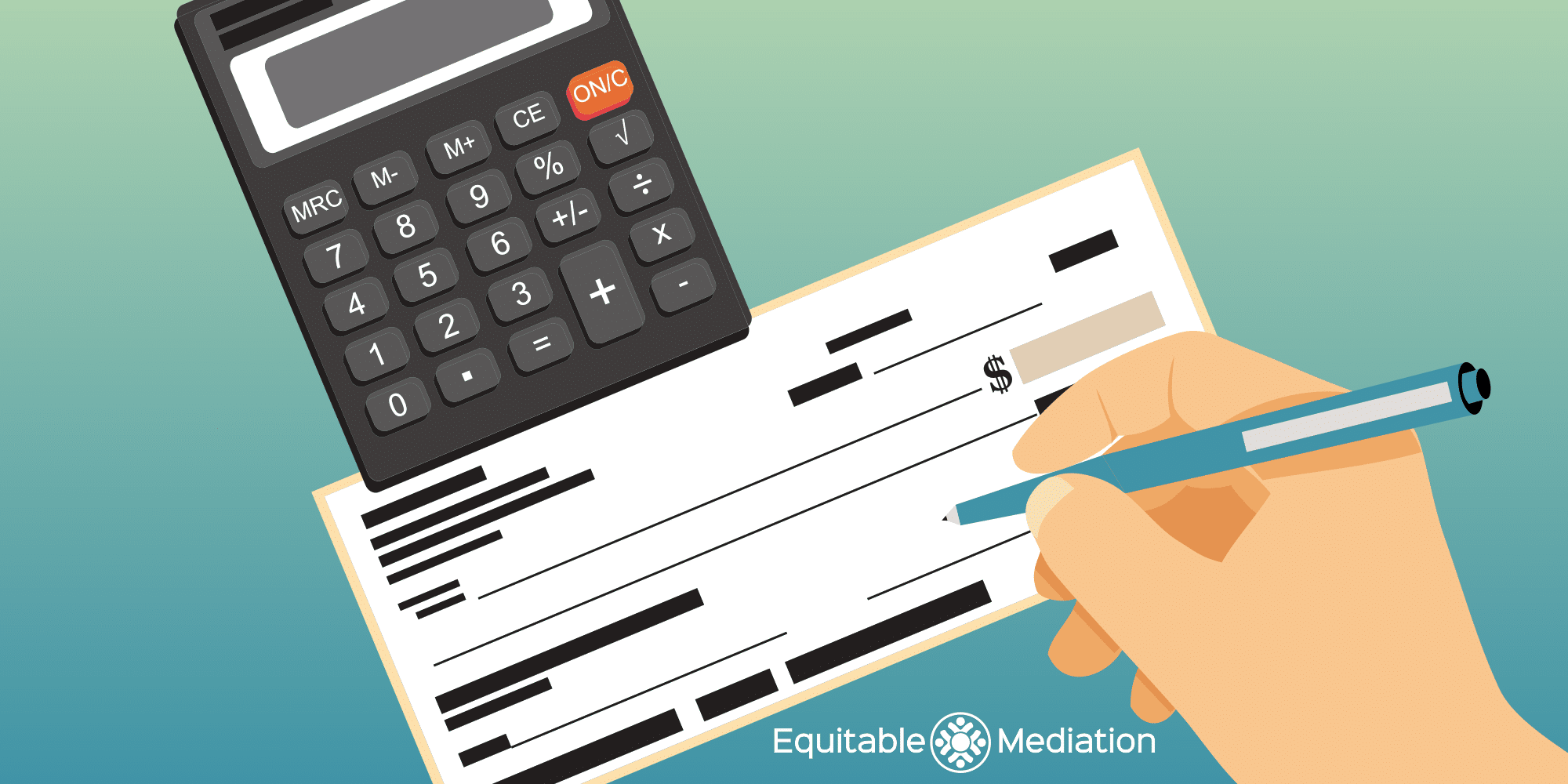
Split comparison of stacked monthly payment envelopes versus a single large check illustrating options for California Spousal Support. For guidance on structuring fair spousal support, call Equitable Mediation at (877) 732-6682.

The lump sum can be cash, but in California it often consists of some form of assets—stock, retirement accounts, real estate equity, or other property. This is where things get interesting and where you need to be careful.

The California tech economy twist

Here in California, with our tech-heavy economy, lump-sum buyouts often involve company stock. Maybe one spouse works for a tech company and has substantial equity compensation. Rather than paying monthly support for years, they transfer a portion of their stock holdings to buy out the support obligation.

This can work beautifully, but…

Tech company valuations can be extraordinarily volatile. A stock portfolio worth $200,000 today might be worth $300,000 in six months or $100,000 in six months. We’ve all watched companies soar and crash. If you’re accepting stock as your lump sum support buyout, you’re taking on significant investment risk.

In mediation, when we discuss stock-based buyouts, I help couples understand this risk clearly. Are you comfortable with volatility? Do you have the financial literacy to manage a stock portfolio? Do you understand that the value could decline substantially? These aren’t hypothetical concerns—I’ve seen situations where the supported spouse accepted stock that dropped 40% in value within a year of the divorce.

Tablet displaying volatile stock market chart representing risks of lump sum payments in California Spousal Support. Call Equitable Mediation at (877) 732-6682 for expert financial guidance during spousal support planning.

If you’re going to accept stock as part of a lump sum buyout, consider diversifying immediately. Yes, there may be tax implications, but protecting yourself from catastrophic loss of value might be worth it. This is precisely the kind of financial analysis where my MBA background helps couples think through the real-world implications of their choices.

Trading the house for alimony

Another standard lump sum structure in California is trading home equity for spousal support. Maybe you jointly own a home with substantial equity. Instead of paying monthly support, one spouse keeps the entire house while the other spouse gives up their equity share in exchange for eliminating the support obligation.

Here’s the appeal: the supported spouse gets a valuable asset and a place to live. The paying spouse eliminates years of monthly obligations. Clean, simple, done.

But while you’ve indeed received something of significant value when you get the house, you absolutely must ensure you have ongoing cash flow to meet the expenses of owning that asset. And in California, those expenses are substantial!

Think about what it actually costs to own a home here: mortgage payments (unless the house is paid off), property taxes that can run $10,000 to $30,000 annually or more, homeowners’ insurance, HOA fees if applicable, maintenance, repairs, and utilities. California housing isn’t just expensive to buy—it’s expensive to maintain.

I’ve seen situations where the supported spouse successfully negotiates to keep the house rather than receive California spousal support, only to find themselves house-rich but cash-poor. They have this valuable asset, but struggle to pay property taxes and basic maintenance costs. Within a couple of years, they’re forced to sell the house anyway, but now they’ve lost years of monthly support they desperately needed.

Worried woman calculating bills showing cash flow challenges while paying California Spousal Support. For help structuring fair and manageable spousal support, call Equitable Mediation at (877) 732-6682.

In mediation, when couples consider trading the house for support, we do a detailed cash flow analysis. What will your monthly expenses be? What income will you have? Can you actually afford to keep this house without monthly support?

Sometimes the answer is yes—maybe you’re going back to work at a good salary, or you have other income sources. Sometimes the answer is no, and we need a different structure.

The pros of lump sum spousal support

The most significant advantage is finality. Both spouses can make a clean break with no ongoing financial ties. The paying spouse doesn’t have to write a check every month for the next decade. The supported spouse doesn’t have to worry about whether the payment will arrive on time or what happens if the paying spouse loses their job.

From a paying spouse’s perspective, the lump sum often costs less in total than monthly payments over time. When we calculate present value—what future payments are worth in today’s dollars—there’s typically a discount. Paying $150,000 today might eliminate a $180,000 obligation spread over five years.

For the supported spouse, there are advantages too. You get immediate access to substantial funds or assets. You can invest the money to buy a home, fund your education, or build financial security. You’re not dependent on your ex-spouse’s continued ability or willingness to pay.

Lump-sum arrangements also eliminate future disputes over support. No arguments about modification if circumstances change. No going back to court. No enforcement issues if payments stop. It’s settled and done.

The cons and risks you need to understand

For the paying spouse, coming up with a lump sum requires either substantial liquid assets or the ability to liquidate assets, often triggering tax consequences. If you need to sell investments to raise cash, you might face capital gains taxes. If you’re withdrawing from retirement accounts early, you might face taxes and penalties.

From the supported spouse’s perspective, you’re taking on the responsibility of managing a lump sum wisely. Get monthly payments for five years, and you have a predictable cash flow. Get $150,000 upfront, and you need to make it last: invest, budget it properly, and don’t blow through it.

Another risk is that alimony typically terminates upon remarriage. But if you’ve done a lump-sum buyout and the supported spouse remarries within 6 months of the divorce, the paying spouse has no recourse. The money or assets are already transferred. You can’t get them back just because the circumstances that would have terminated monthly support have occurred.

I’ve seen paying spouses feel deeply burned by this scenario—they paid out a substantial lump sum, only for their ex-spouse to remarry quickly. Had they structured it as monthly payments, those payments would have ended at remarriage. With a lump sum, what’s done is done.

There’s also the risk of changed circumstances that affect fairness. What if the supported spouse becomes disabled and can’t work? With monthly support, there might be grounds for modification or extension. With a lump sum, too bad – the deal is done.

What if the paying spouse loses their job right after making the lump sum payment? Unlike monthly payments that might be modifiable, the lump sum can’t be un-transferred.

When lump sum buyouts work well

Despite the risks, lump-sum arrangements are appropriate in certain situations. They’re great when both spouses want a clean break and neither wants an ongoing financial connection. They work well when the paying spouse has sufficient liquid assets to make the payment without hardship. They’re attractive when the supported spouse is financially sophisticated enough to manage the lump sum wisely.

Lump sum buyouts also make sense when there’s significant animosity and you want to minimize future contact. Monthly payments mean ongoing interaction, at least financially. A lump sum means you’re done.

How do we structure these in mediation?

When couples in my practice want to explore lump-sum support, we work through a detailed financial analysis. We calculate the total monthly payments over the anticipated duration. We apply the appropriate present-value discount. We review the available assets for transfer and their tax implications. We examine whether the supported spouse can realistically manage without ongoing monthly cash flow.

We also discuss timing and structure. Maybe it’s a partial lump sum combined with reduced monthly payments—a hybrid approach that provides both immediate funds and ongoing cash flow. Maybe we should structure the lump-sum payment into two or three installments rather than all at once.

The key is that both spouses understand precisely what they’re agreeing to, including the risks and the finality of the arrangement.

Making an informed choice

Lump sum spousal support can be an excellent solution for the right couple. But it’s not right for everyone, and the unique aspects of California’s economy—particularly stock volatility and housing costs—create specific risks you need to understand.

In mediation, we can explore whether a lump sum structure makes sense for your situation and craft an arrangement that works. The choice is yours, but it should be an informed choice based on a realistic analysis of your financial circumstances and needs.

Your spousal support doesn’t have to follow the monthly payment model. But whatever structure you choose should reflect a clear-eyed understanding of the implications.

“You may have researched how alimony works in your state. But in my experience, regardless of whether a state offers guidance on how to resolve alimony, often, couples negotiate their own agreement tailored to their unique situation and circumstances.

So you have a lot of flexibility and can maintain a lot of control if you negotiate the terms of alimony out of court with the help of a skilled professional using an alternative dispute resolution process like divorce mediation or a collaborative divorce .

You and your soon-to-be ex-spouse will more likely come to an alimony arrangement that's acceptable to both of you."

Joe Dillon headshot

Joe Dillon | Divorce Mediator & Founder

FAQs About Alimony in California

Alimony, legally referred to as spousal support or maintenance in California, is a court-ordered financial payment that one spouse provides to the other during separation, divorce proceedings, or after the marriage has been dissolved. The fundamental purpose of these support payments is to assist the lower-earning spouse in maintaining a reasonable standard of living and achieving financial independence following the end of the marital relationship. California Family Code sections 4320 through 4360 govern how spousal maintenance operates within the state’s family law system. The process works in two distinct phases: temporary support during divorce proceedings (sometimes called pendente lite support) and long-term or permanent support established in the final divorce judgment. Courts evaluate numerous factors when making support determinations, including each party’s earning capacity, the marital standard of living, the duration of the marriage, and the financial needs and abilities of both spouses. Unlike child support, which follows specific calculation guidelines, spousal maintenance awards involve considerable judicial discretion based on the unique circumstances of each divorcing couple.

The duration of spousal support payments in California primarily depends on the length of the marriage and the type of support ordered. For marriages lasting fewer than ten years (considered short-term marriages), California courts commonly establish support duration at approximately half the length of the marriage. For example, if a couple was married for six years, the supported spouse might receive maintenance for roughly three years, although this is a general guideline rather than a strict rule. Marriages of ten years or longer are classified as long-duration marriages under California Family Code Section 4336, and these cases receive different treatment. For long-duration marriages, judges retain jurisdiction indefinitely and cannot set a definite termination date at the time of judgment, meaning support could potentially continue for many years depending on circumstances. However, this does not guarantee lifetime alimony; instead, it means the court can revisit and modify the support arrangement as long as the order remains active. Support automatically terminates upon certain events, including the death of either party, the remarriage of the supported spouse, or when the court determines the supported spouse no longer needs assistance or has become self-supporting. The reasonable period for support is determined by how long it would take the supported spouse to obtain the education, training, or work experience necessary to become financially independent.

California judges must evaluate an extensive list of statutory factors outlined in Family Code Section 4320 when determining both the amount and duration of long-term spousal support. These mandatory considerations include the marketable skills and earning capacity of each spouse, along with the job market for those particular skills and any time or expenses required for the supported spouse to acquire education or training for employment. Courts examine the extent to which the supported spouse’s earning capacity was impaired by periods of unemployment during the marriage to permit devotion to domestic duties, recognizing career sacrifices made for the family’s benefit. The standard of living established during the marriage carries significant weight, as courts attempt to allow both parties to maintain a lifestyle reasonably comparable to what they enjoyed while married. Each party’s assets, debts, income from all sources, and overall financial needs are analyzed in detail. The court also considers the duration of the marriage, recognizing that longer marriages typically warrant longer support obligations. The age and health of both spouses factor into determinations, as physical or mental conditions may affect earning ability and financial needs. The ability of the supporting spouse to pay support while meeting their own reasonable needs is balanced against the needs of the spouse seeking support. Additional factors include documented evidence of domestic violence, the balance of hardships to each party, and the goal that the supported spouse become self-supporting within a reasonable period. Tax consequences, though changed by recent federal law, remain relevant for California state tax purposes. Finally, judges may consider any other factors deemed just and equitable in the particular circumstances of the case.

California employs different approaches for temporary versus permanent spousal support calculations. For temporary support during divorce proceedings, most counties use a computer-based guideline formula, often called the “DissoMaster” or “XSpouse” calculator, which generates a support amount based primarily on the parties’ incomes and certain deductions. A common rough estimate suggests taking 35 to 45 percent of the higher earner’s income and subtracting 40 to 50 percent of the lower earner’s income, though actual calculations involve more complexity. This computerized approach provides consistency and predictability during the interim period while the divorce is pending. However, for long-term or permanent spousal support established in the final divorce judgment, California law explicitly prohibits using a formula. Instead, it requires judges to apply the comprehensive Family Code Section 4320 factors discussed above. Courts must consider each statutory factor and make specific findings about the circumstances of the marriage, earning capacities, needs, standard of living, and other relevant considerations. This means there is no mathematical formula or calculator that can definitively determine permanent support amounts; instead, each case requires individualized analysis of the unique facts and circumstances. The judge exercises considerable discretion in weighing these factors and determining what constitutes a fair and reasonable support arrangement. Spouses can negotiate and agree upon any support amount and duration they find mutually acceptable. Still, if they cannot reach an agreement, the judge must use the multi-factor analysis rather than any predetermined calculation to establish the support order.

The widely misunderstood “ten-year rule” refers to how California courts treat marriages of long duration, defined explicitly in California Family Code Section 4336 as marriages lasting ten years or more from the date of marriage to the date of separation. The misconception is that crossing the ten-year threshold automatically guarantees lifetime alimony payments, but this is legally incorrect. What actually happens for marriages of long duration is that the court retains jurisdiction to review and modify spousal support orders indefinitely, meaning there is no automatic cutoff date for the court’s authority to revisit support. For marriages under ten years, courts commonly set support duration at approximately half the marriage length. Once that period expires, the court generally loses jurisdiction unless the order explicitly reserves jurisdiction. In contrast, for long-duration marriages, even though the judge cannot set a definite termination date at the time of judgment, they can establish a review date when the supported spouse must demonstrate continued need for support or face termination. California public policy has evolved away from the outdated concept of permanent lifetime support, as recognized by case law emphasizing that spousal support should last only as long as reasonably necessary for the supported spouse to become self-supporting. The ten-year milestone is significant because it affects the court’s ongoing jurisdiction over support matters, allowing for continued review and modification based on changing circumstances. Still, it does not create an entitlement to indefinite support regardless of circumstances. Factors such as retirement, remarriage, cohabitation, changes in income, or the supported spouse achieving self-sufficiency can all lead to modification or termination even in long-duration marriages.

Remarriage and cohabitation have distinctly different legal effects on spousal support obligations in California. Under California Family Code Section 4337, if the spouse receiving support remarries, spousal support automatically terminates without requiring a court hearing or further legal proceedings. This automatic termination reflects the legal presumption that the new spouse assumes financial responsibility for supporting the remarried party. The supported spouse has a legal obligation to notify the paying spouse about the remarriage; failure to do so can result in a court order requiring repayment of support improperly received after remarriage. This automatic termination rule applies unless the parties’ divorce settlement agreement states explicitly otherwise—spouses can negotiate arrangements where support continues despite remarriage, though this is uncommon. Past-due support obligations and any vested lump-sum payments remain enforceable despite remarriage. Cohabitation—living with a new romantic partner without marriage—does not automatically terminate support but can provide grounds for modification or termination. Under California Family Code Section 4323, cohabitation with a non-marital partner may be considered a changed circumstance that justifies reducing or ending support payments. The paying spouse must file a motion with the court requesting modification and demonstrate that the supported spouse is cohabitating with a partner in a relationship resembling marriage. The court examines whether cohabitation has reduced the supported spouse’s financial needs because they share living expenses and receive support from their new partner. Simply having a roommate does not necessarily qualify, as courts look for evidence of a romantic, committed relationship involving mutual financial support and sharing of resources. The supported spouse can rebut the presumption by proving they still require support despite the living arrangement. The burden falls on the paying spouse to prove that circumstances have changed sufficiently to warrant modification.

California law permits both modification and termination of spousal support orders when circumstances significantly change. However, the process and requirements differ based on the type of support and the duration of marriage. Either spouse can request modification by filing a Request for Order with the family court that issued the original support judgment. The moving party must demonstrate a “material change of circumstances” since the original support order—substantial changes in either party’s financial situation that make the current support amount unfair or inappropriate. Examples of qualifying changes include the paying spouse experiencing involuntary job loss, significant income reduction, disability, or legitimate retirement (typically around age 65), which may justify decreasing support. Conversely, substantial income increases by either party might warrant modification—the paying spouse’s higher earnings could support increased payments, while the supported spouse’s improved income might justify reduction or termination. Health issues, severe illness, or disability affecting either party’s earning capacity or expenses can trigger modifications. The supported spouse’s failure to make reasonable efforts toward self-sufficiency despite court warnings (known as a Gavron warning under Family Code Section 4320) may lead to reduced support or termination. Courts can assign “imputed income” to a supported spouse who voluntarily remains unemployed or underemployed despite having marketable skills and available employment opportunities. Cohabitation with a new partner, as discussed above, can justify modification even without remarriage. For marriages under ten years, once the support order expires, courts generally lose jurisdiction to modify unless jurisdiction was specifically reserved. For marriages of extended duration (ten years or more), courts retain indefinite authority to review and modify support. Parties can also negotiate modification agreements outside of court, but court approval is required to make the changes legally enforceable. Temporary support orders during divorce proceedings can be modified more easily than final support orders. It’s important to note that modifications typically take effect only from the date of filing the request, not retroactively, so timing matters significantly.

The tax treatment of spousal support in California is undergoing a significant change that depends on when your divorce agreement is finalized. California recently enacted Senate Bill 711, which will conform California’s tax treatment of spousal support to federal law starting January 1, 2026.

For divorce agreements or court orders executed on or after January 1, 2019 but before January 1, 2026, there is a split between federal and state tax treatment. Federal law eliminated the tax deduction for alimony payments made by the paying spouse, and recipients no longer report spousal support as taxable income on federal returns. However, California did not conform to these federal changes during this period. For California state income tax purposes, spousal support remained tax-deductible for the paying spouse on their California state return, and the receiving spouse had to report support payments as taxable income on their California state tax return. This created a disconnect between federal and state tax treatment, requiring taxpayers to make adjustments on Schedule CA when filing California returns to account for the different treatment of alimony.

Starting January 1, 2026, Senate Bill 711 changes this split treatment for new agreements. For any spousal support agreement entered into after December 31, 2025, spousal support will be neither deductible for the paying spouse nor taxable income for the receiving spouse at both the federal and California state level. This creates complete tax neutrality and eliminates the confusing split treatment that existed from 2019 through 2025. The new tax treatment also applies to modifications of existing agreements made after December 31, 2025, but only if the modification expressly provides that Senate Bill 711 applies. If you modify an existing pre-2026 agreement without specifically invoking SB 711, the old split tax treatment should continue to apply to that agreement.

For divorce or separation agreements executed on or before December 31, 2018, the original tax rules continue to apply at both federal and state levels. Payments remain deductible for the payor and taxable income for the recipient on both federal and California returns, and this federal AGI (Adjusted Gross Income) figure carries over to the California return without adjustment.

Qualification for spousal support in California is not automatic and depends on demonstrating financial need and disparity between the spouses’ circumstances. Generally, the spouse with significantly lower income or earning capacity may qualify for support if they can establish that they need financial assistance to maintain a reasonable standard of living while working toward self-sufficiency. Key qualifying factors include a demonstrable income disparity between spouses, where one spouse lacks sufficient property or income to maintain reasonable needs and the marital standard of living. The supported spouse must demonstrate a need for time to acquire education, training, or work experience that will make them employable and self-supporting, especially if they have sacrificed career opportunities during the marriage to fulfill domestic duties or support their partner’s career advancement. Marriages where one spouse is the primary wage earner and the other handles domestic responsibilities or raises children often result in support awards. Courts examine whether the requesting spouse’s earning capacity was diminished during the marriage due to an extended absence from the workforce. Several circumstances can disqualify someone from receiving spousal support or result in denial or termination. If the spouse requesting support has a comparable or higher income, substantial assets, or significant financial resources making support unnecessary, they likely won’t qualify. A valid prenuptial or postnuptial agreement waiving spousal support rights is generally enforceable, disqualifying the spouse from seeking court-ordered support unless the contract was executed under duress, fraud, or other circumstances making it unconscionable. Short-term marriages (especially those under three years) may not warrant support, or support duration may be very limited. Evidence that the supported spouse is not making reasonable good-faith efforts toward self-sufficiency despite court orders can lead to termination, especially with a Gavron warning in effect. Remarriage automatically disqualifies the former spouse from continued support. A supported spouse who has achieved self-sufficiency and no longer requires assistance will have support terminated. Receipt of substantial inheritance, lottery winnings, or other financial windfalls may eliminate the need for support. California law also provides that a spouse convicted of domestic violence against their partner may receive reduced support or be ordered to pay additional support beyond what would usually be awarded. Voluntary unemployment or underemployment when capable of working can result in imputed income, reducing or eliminating support eligibility.

California recognizes several distinct types of spousal support, each serving different purposes during and after the divorce process. Temporary spousal support, also known as pendente lite support (Latin for “pending litigation”), is awarded. At the same time, the divorce case is actively ongoing, from the time one party files for divorce until the final judgment is entered. This temporary support helps the lower-earning spouse maintain financial stability and pay living expenses during what can be a lengthy divorce process. Courts typically calculate temporary support using standardized guideline formulas based primarily on income differences between the spouses, providing quick determinations without extensive litigation over the numerous Family Code Section 4320 factors. Permanent or long-term spousal support is established in the final divorce judgment and continues after the divorce is finalized. Despite the term “permanent,” this support is not necessarily lifelong but instead continues for whatever duration the court deems appropriate based on a comprehensive analysis of all statutory factors. Long-term support requires a detailed examination of the 4320 factors and cannot be calculated by formula. Rehabilitative alimony is a specific type of support designed to provide financial assistance while the supported spouse obtains education, vocational training, or work experience necessary to become self-sufficient. Courts favor rehabilitative support that has a defined end date and a clear plan for the supported spouse to reenter the workforce or enhance their earning capacity. This type commonly applies in shorter marriages where the lower-earning spouse needs only temporary assistance to reestablish their career. Reimbursement spousal support compensates one spouse for financial contributions made toward the other spouse’s education, training, or career development during the marriage. For example, if one spouse worked to put the other through medical school with the understanding that both would benefit from increased future earnings, reimbursement support acknowledges those contributions. Lump-sum alimony provides a one-time payment or property transfer instead of ongoing monthly fees. This arrangement can give finality and avoid continued financial entanglement between former spouses. Modifiable versus non-modifiable support is another important distinction—parties can negotiate that support payments remain fixed and cannot be modified regardless of changed circumstances, or they can preserve the court’s jurisdiction to modify support as circumstances warrant. Couples can also agree to “Smith-Ostler” orders, which include support based on both a base amount and a percentage of any bonuses, commissions, or additional income earned by the paying spouse. However, these orders can be complicated to administer and enforce.

Lay the groundwork for a peaceful divorce

About the Authors – Divorce Mediators You Can Trust

Equitable Mediation Services is a trusted and nationally recognized provider of divorce mediation, serving couples exclusively in California, New Jersey, Washington, New York, Illinois, and Pennsylvania. Founded in 2008, this husband-and-wife team has successfully guided more than 1,000 couples through the complex divorce process, helping them reach amicable, fair, and thorough agreements that balance each of their interests and prioritizes their children’s well-being. All without involving attorneys if they so choose.

At the heart of Equitable Mediation are Joe Dillon, MBA, and Cheryl Dillon, CPC—two compassionate, experienced professionals committed to helping couples resolve divorce’s financial, emotional, and practical issues peacefully and with dignity.

Photo of mediator Joe Dillon at the center of the Equitable Mediation team, all smiling and poised around a conference table ready to assist. Looking for expert, compassionate divorce support? Call Equitable Mediation at (877) 732-6682 to connect with our dedicated team today.

Joe Dillon, MBA – Divorce Mediator & Negotiation Expert

As a seasoned Divorce Mediator with an MBA in Finance, Joe Dillon specializes in helping clients navigate complex parental and financial issues, including:

  • Physical and legal custody
  • Spousal support (alimony) and child support
  • Equitable distribution and community property division
  • Business ownership
  • Retirement accounts, stock options, and RSUs

Joe’s unique blend of financial acumen, mediation expertise, and personal insight enables him to skillfully guide couples through complex divorce negotiations, reaching fair agreements that safeguard the family’s emotional and financial well-being.

He brings clarity and structure to even the most challenging negotiations, ensuring both parties feel heard, supported, and in control of their outcome. This approach has earned him a reputation as one of the most trusted names in alternative dispute resolution.

Photo of Cheryl Dillon standing with the Equitable Mediation team in a bright conference room, all smiling and ready to guide clients through an amicable divorce process. For compassionate, expert support from Cheryl Dillon and our team, call Equitable Mediation at (877) 732-6682 today.

Cheryl Dillon, CPC – Certified Divorce Coach & Life Transitions Expert

Cheryl Dillon is a Certified Professional Coach (CPC) and the Divorce Coach at Equitable Mediation. She earned a bachelor’s degree in psychology and completed formal training at The Institute for Professional Excellence in Coaching (iPEC) – an internationally recognized leader in the field of coaching education.

Her unique blend of emotional intelligence, coaching expertise, and personal insight enables her to guide individuals through divorce’s emotional complexities compassionately.

Cheryl’s approach fosters improved communication, reduced conflict, and better decision-making, equipping clients to manage divorce’s challenges effectively. Because emotions have a profound impact on shaping the divorce process, its outcomes, and future well-being of all involved.

What We Offer: Flat-Fee, Full-Service Divorce Mediation

Equitable Mediation provides:

  • Full-service divorce mediation with real financial expertise
  • Convenient, online sessions via Zoom
  • Unlimited sessions for one customized flat fee (no hourly billing surprises)
  • Child custody and parenting plan negotiation
  • Spousal support and asset division mediation
  • Divorce coaching and emotional support
  • Free and paid educational courses on the divorce process

Whether clients are facing financial complexities, looking to safeguard their children’s futures, or trying to protect everything they’ve worked hard to build, Equitable Mediation has the expertise to guide them towards the outcomes that matter most to them and their families.

Why Couples Choose Equitable Mediation

  • 98% case resolution rate
  • Trusted by over 1,000 families since 2008
  • Subject-matter experts in the states in which they practice
  • Known for confidential, respectful, and cost-effective processes
  • Recommendations by therapists, financial planners, and former clients

Equitable Mediation Services operates in:

  • California: San Francisco, San Diego, Los Angeles
  • New Jersey: Bridgewater, Morristown, Short Hills
  • Washington: Seattle, Bellevue, Kirkland
  • New York: NYC, Long Island
  • Illinois: Chicago, North Shore
  • Pennsylvania: Philadelphia, Bucks County, Montgomery County, Pittsburgh, Allegheny County

Schedule a Free Info Call to learn if you’re a good candidate for divorce mediation with Joe and Cheryl.

Related Resources

  • New York Maintenance Calculations above the $241,000 cap, analyzing discretionary factors, lifestyle impacts, and planning strategies. Call (877) 732-6682 for guidance from Equitable Mediation.

    Beyond the Cap: What Happens When Income Exceeds $241,000 in New York Maintenance Calculations

    Alimony is the most difficult issue to resolve in divorce for many reasons. Learn what alimony is and how it works, so you can secure your financial future

  • Illustration of a California map overlayed with a house icon and dollar sign beside a mediator discussing spousal support options with a couple. Need clear guidance on alimony in California? Call Equitable Mediation at (877) 732-6682 to schedule your consultation today.

    Alimony in California: A Divorce Mediator’s Complete Guide to Navigating Spousal Support

    Find out how alimony in California works and how you can prevent your spousal support negotiation (and divorce) from turning into a disaster!

  • Illustration of a California map overlayed with a house icon and dollar sign beside a mediator discussing spousal support options with a couple. Need clear guidance on alimony in California? Call Equitable Mediation at (877) 732-6682 to schedule your consultation today.

    New Jersey Alimony Guide: How Spousal Support is Really Calculated

    Determining alimony in NJ is very challenging. Learn what you need to know about this complex topic and how to get a fair alimony agreement.