If you’re approaching your 20th wedding anniversary and also contemplating divorce, you might be feeling a special kind of panic. Maybe you’ve heard that crossing that 20-year threshold means you’ll be paying alimony forever. Or perhaps you’re counting on permanent support because someone told you that being married 20 years guarantees it.
I need to clear something up right away: nothing about alimony in New Jersey is automatic.
Not at 20 years. Not at any length of marriage.
Yes, the 20-year mark is significant in New Jersey. But it’s not the automatic trigger for lifetime alimony that many people fear or expect. As a divorce mediator with a finance background, I help couples understand the implications of the 20-year threshold and how mediation can be used to create a tailored agreement that suits their specific situation.
Please note: The financial examples in this post are for illustration purposes only and use simplified scenarios with round numbers to demonstrate concepts. Every divorce situation is unique, with different income levels, expenses, family circumstances, and financial complexities. These examples are not predictions of what you should expect in your specific case. I’m not a lawyer and cannot provide legal advice or tell you what alimony amount you’ll receive or pay.
What the 20-Year Threshold Actually Means

New Jersey’s 2014 alimony reform created a “bright line” rule at 20 years of marriage. For marriages under 20 years, there’s a straightforward guideline: limited duration alimony typically cannot exceed the length of the marriage. So if you were married 15 years, you’re generally looking at a maximum of 15 years of alimony.
But once you cross that 20-year threshold, that time limitation disappears. This opens the possibility of open durational alimony—the type without a predetermined end date.
Here’s what it doesn’t mean: it doesn’t mean alimony is guaranteed. It doesn’t mean the amount will be huge. And it definitely doesn’t mean it will literally last forever without any possibility of change.
Why the 20-Year Mark Isn’t an Automatic Trigger
Even in a 25-year or 30-year marriage, there are still many factors that affect whether alimony makes sense at all. In New Jersey, 13 different factors are considered, including each person’s income and earning capacity, the marital standard of living, ages, health, parental responsibilities, and contributions to the marriage.
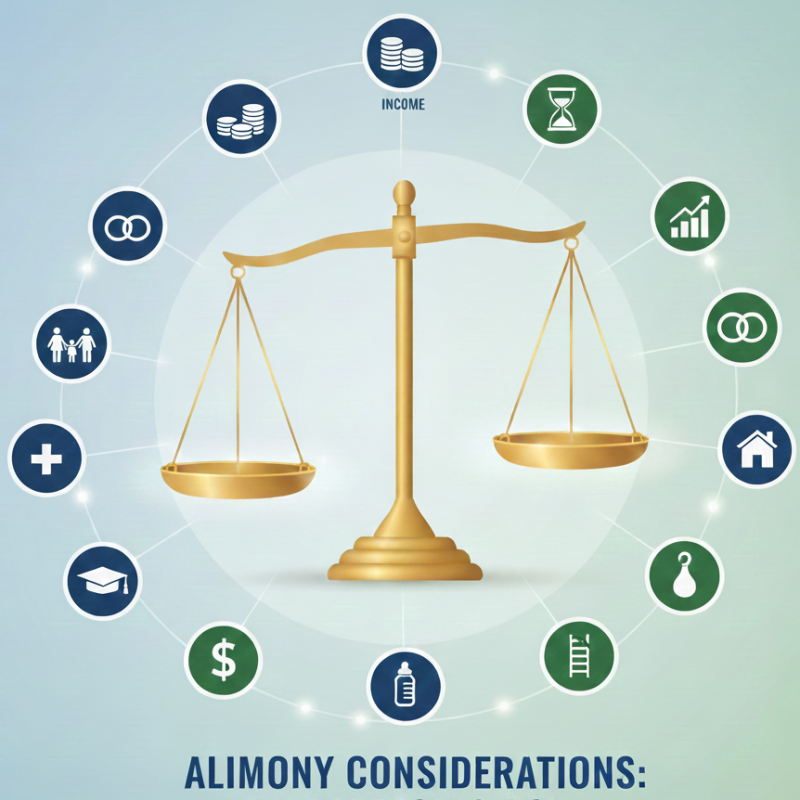
Let me give you a real-world example. Suppose you got married at 27 and have been married for 22 years. Both of you worked throughout the marriage—maybe you each earn around $80,000 annually. You maintained a modest lifestyle, and you’re both healthy and employable. In that situation, no alimony might be appropriate, even though you crossed that 20-year threshold.
On the flip side, maybe you’ve been married for 22 years, and one spouse earns $150,000 while the other earns $40,000 after being out of the workforce for 18 years, raising children. That’s a significant income disparity. In that situation, open durational alimony might make sense—perhaps $3,000 to $4,000 monthly. But even then, the amount and specific terms aren’t predetermined by hitting 20 years.
The length of your marriage is just one factor among the 13 alimony statutory factors in New Jersey.
What “Open Durational” Really Means
“Open durational” means there’s no end date set in your divorce agreement when you finalize it. However, it does not mean that alimony can never end or be modified.
Open durational alimony can be terminated or modified when circumstances change significantly. The person paying alimony reaches retirement age. The person receiving alimony remarries or begins cohabiting with a new partner. Either person experiences a significant change in income or health. The recipient becomes self-supporting.
So even though there’s no specific end date, there are multiple exit ramps. I think of it this way: limited duration alimony has a built-in expiration date. Open durational alimony doesn’t have an expiration date, but, like the Garden State Parkway, it has exit ramps—retirement, remarriage, cohabitation, and substantial changes in circumstances.
How Mediation Gives You Control Over This Decision
Here’s one of the most significant advantages of mediation for couples facing this 20-year question: you don’t have to wonder what might happen if you left these decisions to someone else. If you go to court, you’re putting these decisions in the hands of a judge who doesn’t know you and has about 30 minutes to make decisions that will affect your financial life for decades. You might end up with something neither of you wanted. That’s why mediation is such a powerful alternative.
Maybe you’ve been married 21 years, but you’re both in your mid-40s with strong earning potential. In mediation, you could negotiate a limited-duration alimony arrangement that lasts 8 or 10 years, even though open durational alimony would be possible.
Or maybe you’ve been married 23 years with a significant income disparity, but the higher earner plans to retire in 12 years. We can structure an alimony agreement that lasts until retirement, with step-downs as retirement approaches. For example, maybe it’s $3,500 monthly for the first eight years, then drops to $2,500 for the next three years, then $1,500 for the final year, ending at retirement. We can specify exactly what happens at retirement, rather than leaving it vague.
Using my finance background, I help couples model these different scenarios. What does the payor’s budget look like paying $3,000 monthly through retirement versus paying $5,000 monthly for a shorter 10-year period? What does the recipient’s financial picture look like with 10 years of support at $4,000 monthly versus indefinite alimony at $2,500 monthly? Can we restructure asset division—perhaps giving the recipient an extra $100,000 from the marital home equity—to reduce or eliminate ongoing alimony?
These conversations give you flexibility and control you wouldn’t have otherwise. You get to weigh your priorities, look at the numbers, and make informed decisions together.
The Financial Planning Considerations for Longer Marriages

When you’ve been married 20 years or longer, the financial considerations get more complex because you’re typically talking about people in their mid-40s or older. Retirement isn’t some distant abstraction—it’s something you need to plan for.
In mediation, we talk through questions like: How many working years does each person have left? What retirement assets were accumulated during the marriage? How does Social Security factor in? If one person has a pension, how does that affect the alimony discussion?
I’ve worked with couples married for 25 years, in which we structured alimony at $2,000 per month to bridge the gap until the recipient reaches 62 and can start taking Social Security. At that point, the alimony drops to $1,000 monthly because Social Security benefits provide additional income. I’ve worked with others where giving the lower-earning spouse an extra $200,000 in retirement accounts eliminated the need for ongoing alimony.
The 20-year mark matters not only for alimony duration but also tends to coincide with more substantial retirement assets being at stake. These pieces of the financial puzzle need to be solved together. That’s the kind of integrated financial planning you can do in mediation with someone who has real financial expertise.
Moving Forward with Clarity and Control
If you’re at or near that 20-year mark and facing divorce, here’s what I want you to take away: yes, the 20-year threshold matters in New Jersey. It removes the durational cap on alimony. But it doesn’t automatically mean lifetime support, and it doesn’t remove your ability to negotiate something that makes sense for your circumstances.
The length of your marriage is one factor among many. Your ages, incomes, health, earning potential, and standard of living during the marriage all matter just as much or more than whether you were married 19 years or 21 years.
Alimony discussions are rarely easy, especially after a long marriage. But understanding how New Jersey actually handles this, rather than what people fear, helps you have more grounded, productive conversations about what’s really fair for your situation.
In mediation, you have something litigation can never give you: control. In court, you’re hoping a stranger makes good decisions about your financial future in a 30-minute hearing. In mediation, you’re designing solutions that actually work for both of you based on your complete financial picture.
This is especially important when you’re looking at 20+ years of marriage because the financial complexity increases dramatically. You’re dealing with substantial retirement accounts, pensions, Social Security timing, healthcare considerations, and long-term planning that affects your life for decades. With an MBA in finance and nearly 20 years of mediation experience, we can work through that complexity together. We don’t just figure out what works today—we help you anticipate how your agreement will work 10 or 15 years from now when circumstances change.
That future-focused planning approach means you’re not just getting through your divorce; you’re preparing for it. You’re setting yourself up for financial security and clarity in the years ahead. You understand what happens at retirement, what happens if income changes, and what happens as you both move into different life stages.
If you’re facing these questions about alimony after 20 years of marriage in New Jersey, mediation with the right financial expertise makes all the difference. You deserve an approach that turns anxiety into understanding and helps both of you move forward with confidence and control.

FAQs About Alimony in New Jersey
About the Authors – Divorce Mediators You Can Trust
Equitable Mediation Services is a trusted and nationally recognized provider of divorce mediation, serving couples exclusively in California, New Jersey, Washington, New York, Illinois, and Pennsylvania. Founded in 2008, this husband-and-wife team has successfully guided more than 1,000 couples through the complex divorce process, helping them reach amicable, fair, and thorough agreements that balance each of their interests and prioritizes their children’s well-being. All without involving attorneys if they so choose.
At the heart of Equitable Mediation are Joe Dillon, MBA, and Cheryl Dillon, CPC—two compassionate, experienced professionals committed to helping couples resolve divorce’s financial, emotional, and practical issues peacefully and with dignity.

Joe Dillon, MBA – Divorce Mediator & Negotiation Expert
As a seasoned Divorce Mediator with an MBA in Finance, Joe Dillon specializes in helping clients navigate complex parental and financial issues, including:
- Physical and legal custody
- Spousal support (alimony) and child support
- Equitable distribution and community property division
- Business ownership
- Retirement accounts, stock options, and RSUs
Joe’s unique blend of financial acumen, mediation expertise, and personal insight enables him to skillfully guide couples through complex divorce negotiations, reaching fair agreements that safeguard the family’s emotional and financial well-being.
He brings clarity and structure to even the most challenging negotiations, ensuring both parties feel heard, supported, and in control of their outcome. This approach has earned him a reputation as one of the most trusted names in alternative dispute resolution.

Cheryl Dillon, CPC – Certified Divorce Coach & Life Transitions Expert
Cheryl Dillon is a Certified Professional Coach (CPC) and the Divorce Coach at Equitable Mediation. She earned a bachelor’s degree in psychology and completed formal training at The Institute for Professional Excellence in Coaching (iPEC) – an internationally recognized leader in the field of coaching education.
Her unique blend of emotional intelligence, coaching expertise, and personal insight enables her to guide individuals through divorce’s emotional complexities compassionately.
Cheryl’s approach fosters improved communication, reduced conflict, and better decision-making, equipping clients to manage divorce’s challenges effectively. Because emotions have a profound impact on shaping the divorce process, its outcomes, and future well-being of all involved.
What We Offer: Flat-Fee, Full-Service Divorce Mediation
Equitable Mediation provides:
- Full-service divorce mediation with real financial expertise
- Convenient, online sessions via Zoom
- Unlimited sessions for one customized flat fee (no hourly billing surprises)
- Child custody and parenting plan negotiation
- Spousal support and asset division mediation
- Divorce coaching and emotional support
- Free and paid educational courses on the divorce process
Whether clients are facing financial complexities, looking to safeguard their children’s futures, or trying to protect everything they’ve worked hard to build, Equitable Mediation has the expertise to guide them towards the outcomes that matter most to them and their families.
Why Couples Choose Equitable Mediation
- 98% case resolution rate
- Trusted by over 1,000 families since 2008
- Subject-matter experts in the states in which they practice
- Known for confidential, respectful, and cost-effective processes
- Recommendations by therapists, financial planners, and former clients
Equitable Mediation Services operates in:
- California: San Francisco, San Diego, Los Angeles
- New Jersey: Bridgewater, Morristown, Short Hills
- Washington: Seattle, Bellevue, Kirkland
- New York: NYC, Long Island
- Illinois: Chicago, North Shore
- Pennsylvania: Philadelphia, Bucks County, Montgomery County, Pittsburgh, Allegheny County
Schedule a Free Info Call to learn if you’re a good candidate for divorce mediation with Joe and Cheryl.